AI Orchestration in Software Engineering: What CTO Craft Con Confirmed
AI orchestration is moving from theory into day-to-day software delivery. In this article, we unpack the most useful lessons from CTO Craft London and what leaders need to do now to succeed in this new reality.
CTO Craft Con London felt different this year. A year ago, discussions were around AI pilots, with people getting excited about the companies who were taking the next step with AI.
This year, there was a mix of nervousness around the dramatic changes we are already seeing and competitiveness amongst those who were steaming ahead (primarily AI-native start-ups).
We partnered with CTO Craft to survey technology leaders about how engineering might look in two years’ time, leading to the report, Engineering 2028: Leading Human + AI Teams Responsibly. What struck us at the London conference was how closely the report aligned to what so many people told us about their experiences.
“The shift in mindset over the past year has been striking. At CTO Craft 2025, many leaders were still cautious about AI and how it would impact our industry. This year, everyone agreed that AI is already changing the industry, and at speed. After only a year, we’re mostly hearing about how companies are using AI in practice.” – Aleksandar Karavasilev, CTO at Damilah
Headcount is not shrinking as AI increases output
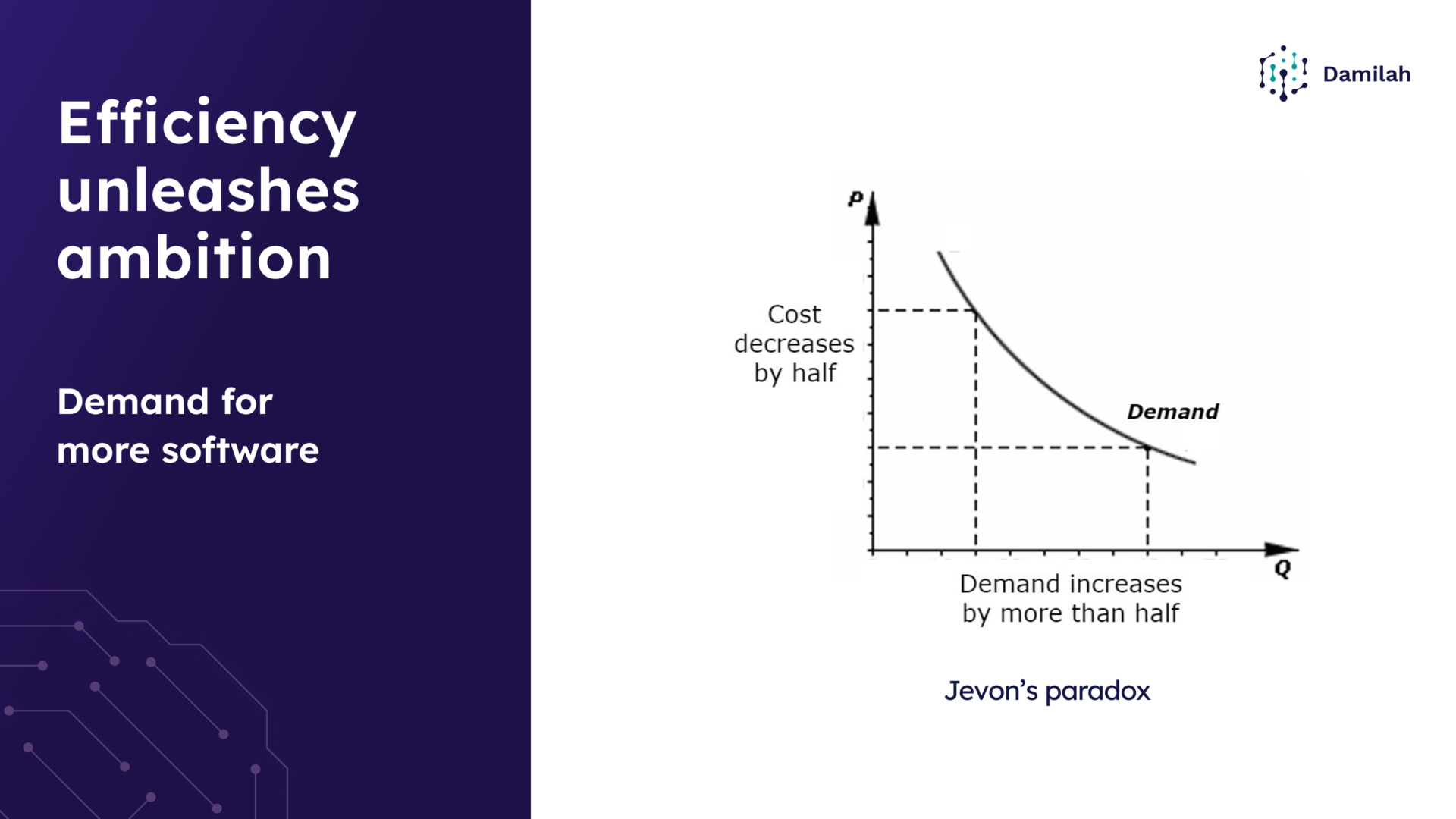
According to our Engineering 2028 report, increased AI-enabled productivity drives increased demand for more software. Ideas that were sitting in a “maybe later” pile are becoming viable and roadmaps are rapidly stretching. Companies need to maintain their headcount to keep up with the latent demand for new features and products.
The CTOs we met at CTO Craft were from a range of companies. Those at investor-backed software companies largely agreed with what was said in the report, as they face increased pressure to deliver AI-based solutions. At more established or non-software companies, issues were still around legacy systems preventing advancement with AI, meaning humans are more in need than ever. And at the opposite end, there were software start-ups with a couple of people able to create a brilliant product from scratch with AI, which would have previously taken months and a critical mass of software engineers.
Speed is shifting the bottleneck in the SDLC
“For so long, engineering has been the bottleneck in the software development lifecycle (SDLC). As that constraint starts to ease, pressure moves into other parts of the lifecycle, especially discovery, alignment, and review.” – Iain Bishop, CEO at Damilah
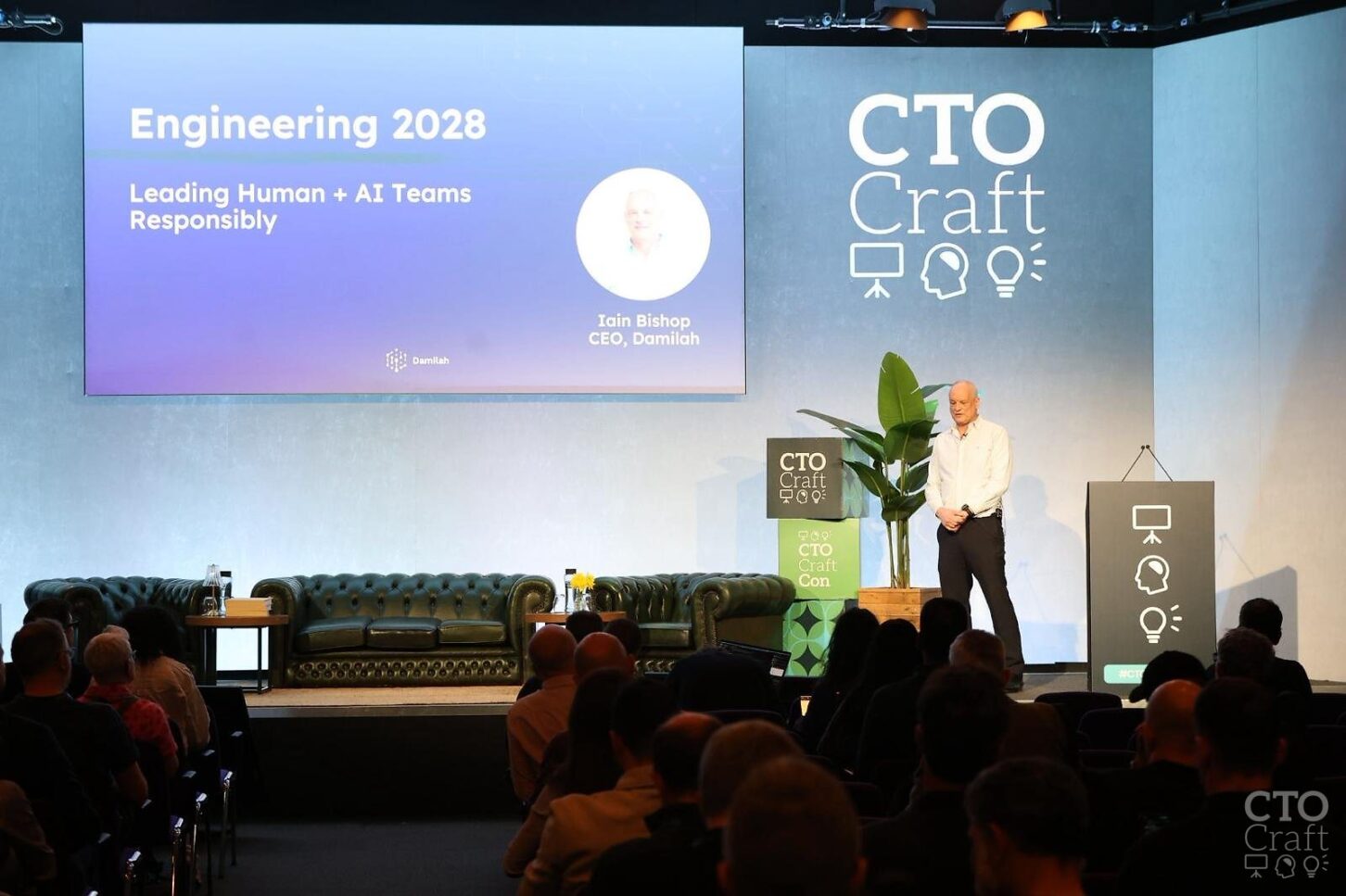
In Iain’s talk at CTO Craft, he highlighted the findings of the report Engineering 2028 around AI transforming the SDLC. New features or products are possible to generate in a fraction of the time with fewer people involved, but they are not perfect and not necessarily built for purpose. So, while AI rapidly accelerates code creation, removing a major bottleneck in the SLDC, when it comes to code review, we see new delays.
Moving towards AI orchestration
This displaced bottleneck is changing how software engineering teams work every day and how they are structured. In our Engineering 2028 report, organisations earlier in their AI journey reported using AI to help engineers move faster on individual tasks. Organisations further along the journey are redesigning the teams altogether.
“Many of the presentations I saw at CTO Craft validated and reinforced our view that the future of engineering is orchestration. Companies are increasingly using AI platforms to support how work flows through teams.” – Iain Bishop.
Software engineers need to become “AI orchestrators”, setting tasks for multiple agents. The need for human review of AI’s output increases, as well as checking agents’ processes throughout the development process.
Engineering 2028 Leading Human + AI Teams Responsibly
A joint Damilah & CTO Craft survey of senior technology leaders
An interesting talk from Sonar compared the difference between different LLMs when it comes to creating code. Newer models create significantly more lines of code. And the more code you produce, the more bugs will be produced. Sonar proved this and, while the bugs were minimal, they do stack up when it comes to writing millions of lines of code in seconds. This means newer LLMs inevitably produce more bugs.
So, speed is improving, but quality is not automatically keeping pace. This backs up what respondents felt in our survey with CTO Craft, where only 8% are seeing AI generate higher quality outcomes. More code means more to review, so governance needs to accelerate in line with the speed of AI’s coding. Governance needs to be built into how teams operate from the start.
What AI cannot replace
As Iain said in his talk: “AI builds the how. We own the why.”
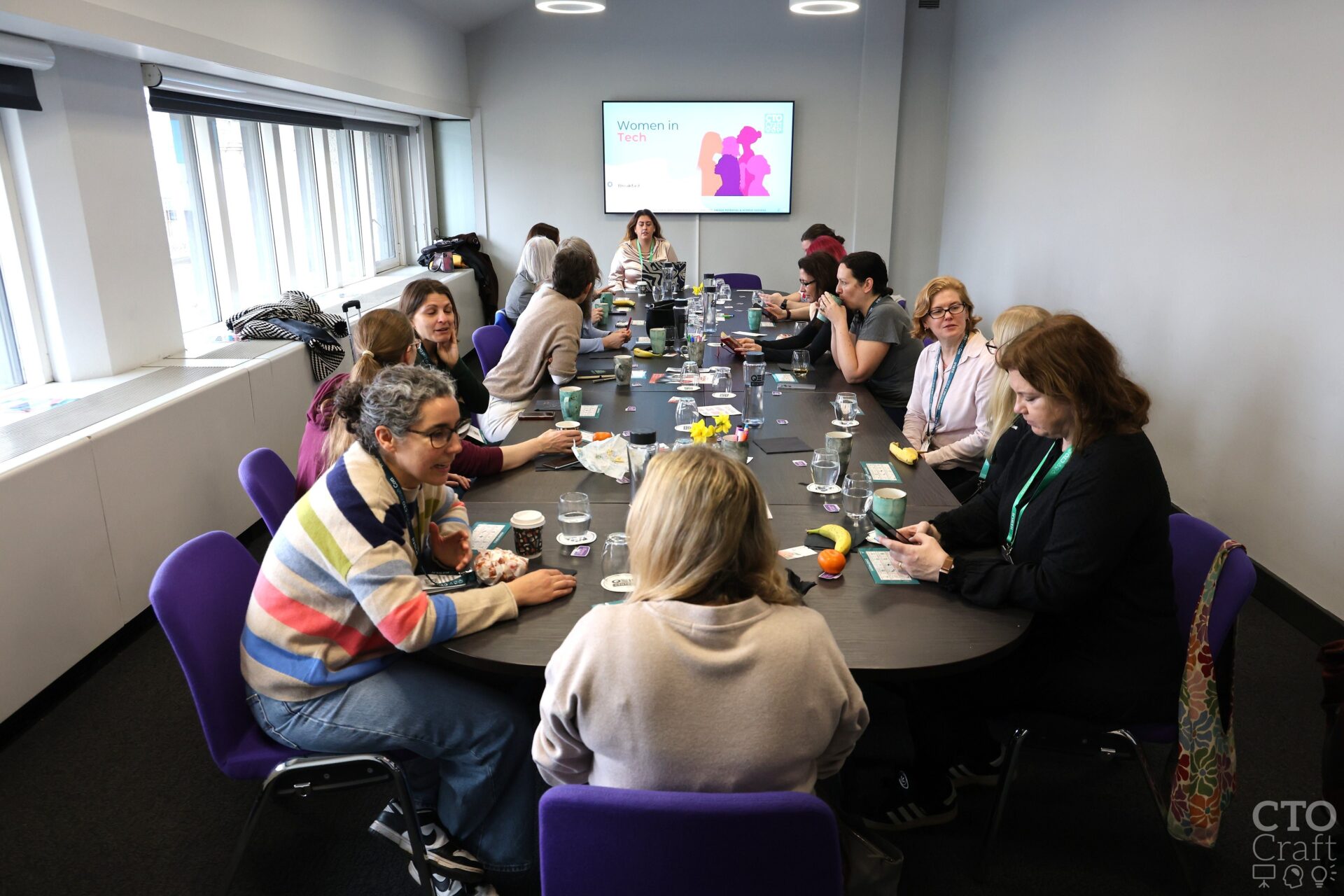
The combination of judgement, strategy, empathy, and a deep understanding of both the customer and the business determines whether good work gets built at all. After the Women in Tech breakfast, Damilah’s Head of Marketing, Julia Valentine, reported:
“One woman I spoke to said that ‘soft skills’ sounds like ‘easy’, i.e. the opposite of hard. But the one thing AI can’t do is ‘soft skills’. People who excel at soft skills (these days, often women) will be more desirable in tech leadership than those with ‘hard skills’, such as coding. Could this be an opportunity to seize gender equality in tech?”
AI is highly effective at execution, but it does not understand context in the way people do. It does not carry accountability, nor does it understand what matters most to the business or customers.
As Hywel Carver, CEO at Skiller Whale, put it: “The one thing AI cannot do that humans can is empathy.”
How engineering teams are evolving
As AI takes on the kinds of tasks engineers used to focus on, engineers now need to get a better grasp on product, even transforming from software engineers into product engineers. This means understanding what both customers and what the business want to achieve, connecting technical decisions to commercial outcomes.
Leaders need to understand this shift to develop the right people in their teams, as well as hire the right people into new roles that may arise. CTOs’ and CPOs’ roles are becoming more closely aligned, and we are seeing the rise of the CTPO role.
As Iain put it in his talk, “Engineering in 2028 isn’t a tooling upgrade. It’s a leadership redesign.”
The organisations that come out ahead over the next few years will be those that have genuinely rethought how their teams are organised around them: moving from the focus on AI tools to AI orchestration.
We’ll discuss why some organisations make real progress with AI while others stall, what more mature adoption looks like in practice, and how engineering teams can start moving towards orchestration.