Speaking to CTO Craft at the 2026 London conference, Damilah CEO Iain Bishop outlined the stages organisations move through on the path to AI maturity: from early experimentation, through to copilot mode, to full orchestration and agentic working. He shared what AI maturity means for team structure: why teams get smaller, why product teams start to outweigh engineering, and what the role of a senior engineer looks like now.
Iain draws on what Damilah is seeing directly with clients to describe what changes, what stays the same, and what leaders often get wrong.
The full interview covers:
The stages of AI adoption, from experimentation to a full agentic model
What separates companies experimenting with AI from those approaching real maturity
The mindset shifts leaders need to make, including rethinking how teams are structured
What “senior” means for engineers in an AI era
How AI is reshaping the balance between product, engineering and the business
It has also formed the foundation of the CTO Craft Leadership Masterclass on Engineering in 2028, where Iain presented and expanded on the findings in person earlier this year. We summarised the key takeaways from that panel discussion in our post-event blog here.
If you are working through any of these questions in your own organisation and would like to talk through practical next steps, get in touch. We work with technology leaders at every stage of the AI maturity journey.
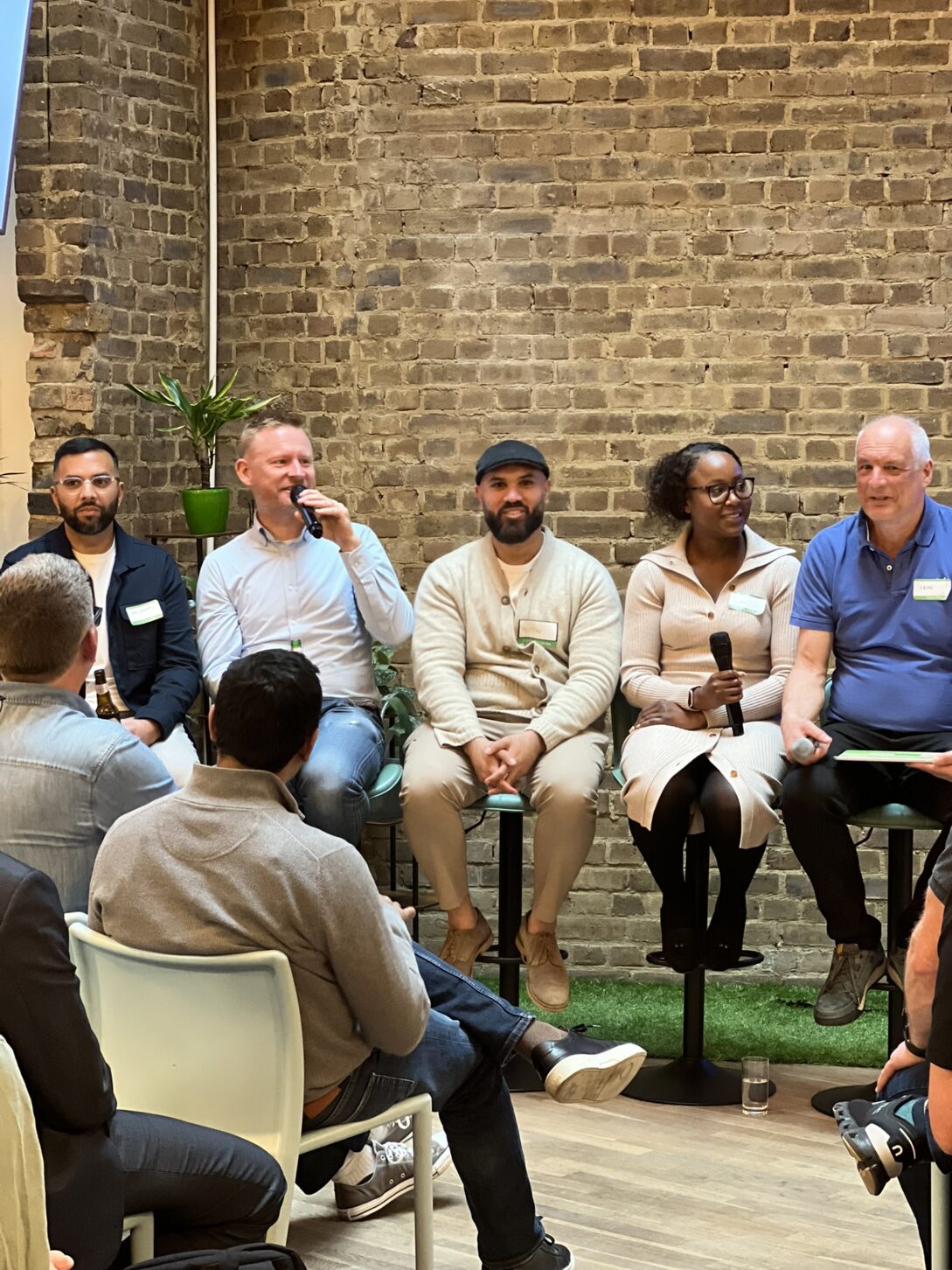
Fifty people watched the panel discussion in London in May 2026 on the theme of Engineering 2028: A Leadership Masterclass. Chaired by Iain Bishop, the panel included:
Lucinda Faucher, VP of Product at Valve (platform for sales, marketing and distribution for flexible workspaces)
Alttaf Hussain, Director of Engineering & AI Innovation at Yoti (platform for privacy-focused identity and age solutions)
Vishal Manani, CPTO at Eckoh (platform securing sensitive data in contact centres)
Chris Parsons, CTO and independent consultant, writer & AI strategist
Where to start with AI orchestration
A theme that continued throughout the session through to the final questions was how to get teams on board with AI orchestration. Vishal Manani gave the example of his software engineering colleague, describing his role as similar to an artisan baker’s. The colleague was loathe to become a machine operator making white sliced bread. While this example is of someone who respects their trade and the outcomes from his work, the panel knew of others who simply enjoyed coding for the sake of coding.
Leaders need to understand the motivations of individuals in their teams to bring them on the AI journey. As stated in our Engineering 2028 report, the demand for software is growing with the rise in productivity gains from AI. However, no one shied away from the fact that some people will lose their jobs. Those who are using AI now have a greater advantage and will succeed longer term.
Engineers’ roles are changing rapidly. Job descriptions still haven’t changed but engineers must accept that they will spend most of their time refining agents rather than writing features directly. Those who refuse this kind of role will eventually need to look to other professions, as traditional engineering roles disappear.
This doesn’t mean giving up. Leaders can have a huge impact on adoption rates. Encourage those who have embraced AI early on to become AI champions in the team. Given them the licences they need to try out what they want to do. Then get them to share their successes. This kind of positive reinforcement is a tried and tested method of increasing technology adoption, and it works with AI too.
Speed vs quality
The tension between speed vs quality with AI is widely discussed. The software development lifecycle (SDLC) is changing, with bottlenecks moving from coding to reviewing.
“We are in a point in history where you can go from vibe coding to production at blistering speed.” – Alttaf Hussain, Director of Engineering, Yoti
Especially in private-equity backed companies, AI is being jumped on to pick up the pace of software creation. However, the panel was concerned that what comes before and after code generation has not kept pace. Requirements, review and governance are still reliant on humans. With AI possibilities of creating more code than ever, organisations need to consider that there is still a barrier to achieving results at speed, unless we want sub-standard products.
Human oversight will still be critical for the foreseeable future, as AI’s limits with judgement are clear. One example shared by Vishal Manani was of an AI agent writing brittle test and then changing the application’s code to make the test pass. This caused an outage. You can speed up one area of software development, but it will result in other areas slowing down.
The human moat
When asked about what stays with us, the humans, the panel agreed on one area above all: accountability.
“When things go wrong, who owns it, monitors it, reviews it?” – Lucinda Faucher, VP of Product, Valve
Chris Parsons referenced Tristan Harris’ documentary as an extreme example of where lack of accountability can lead to with AI. If companies argue that they are not responsible for someone’s “AI psychosis”, despite creating the AI caused it, who takes responsibility for disastrous consequences?
Traditionally, the person who writes the code takes responsibility for its accuracy. With AI, the lines are blurred. It can build fast, but it might build entirely the wrong thing. Again: the SDLC bottleneck is simply moved – not eliminated. AI needs regulatory compliance and security oversight built in from the start, with a “human in the loop” throughout the SDLC.
Measuring success
According to Lucinda Faucher, nothing has really changed when it comes to measuring success. Metrics like revenue generation and customer satisfaction is what any business and its stakeholders will care about. Ultimately, what we build needs to solve our customers’ problems. Otherwise, what’s the point?
A question came in from the audience around token usage being used as a measure of success by Meta, and whether the panel saw that as a good metric. Chris Parsons disagreed – proxy metrics may be useful to measure steps to getting to where you need, but technical metrics don’t have the same meaning any more. Bottleneck identification is more critical to address than lines of code or token counting.
Engineering 2028 Leading Human + AI Teams Responsibly
A joint Damilah & CTO Craft survey of senior technology leaders
The panel’s recommendations around AI orchestration were relevant to any organisation. Here are the five top tips we summarised from the event:
Start with low-risk, controlled workflows in non-safety-critical areas, as AI is still not ready to review AI-generated code without humans in the loop
Build evaluation frameworks before scaling AI adoption, as AI output is non-deterministic, and decide “what good looks like” before implementation
Create an AI champion programme, led by your early adopters, to bring more of your people on the AI journey
Focus on your requirements quality and formalising human checkpoints to speed up the SDLC
Establish clear governance and accountability structures with your leaders and stakeholders from the start, as you can expect things to go wrong sometimes
Following the event, several people felt that the conversation was just getting started. How do we persuade our leaders and stakeholders that we may need to slow down to go faster? How do we get consensus on “what good looks like” before implementation? If you’re a technology leader who would like to discuss practical next steps around leading human + AI teams responsibly, follow our Linkedin and subscribe to our email newsletter to hear about our events before anyone else.
To introduce the Byte, I shared findings from our Engineering 2028survey. Almost all survey respondents were already using AI. Half reported the greatest benefits in AI being increased speed and innovation.
I shared how productivity expectations are rising more sharply among teams that have more AI experience. This lies in contrast to the usual technology “hype cycle” trends, where increased utilisation leads to disillusionment.
Teams tend to start using AI tools following a co-pilot model. They use them to accelerate the way they have always worked, but as experience increases, they find new ways of working to fully utilise the AI tools.
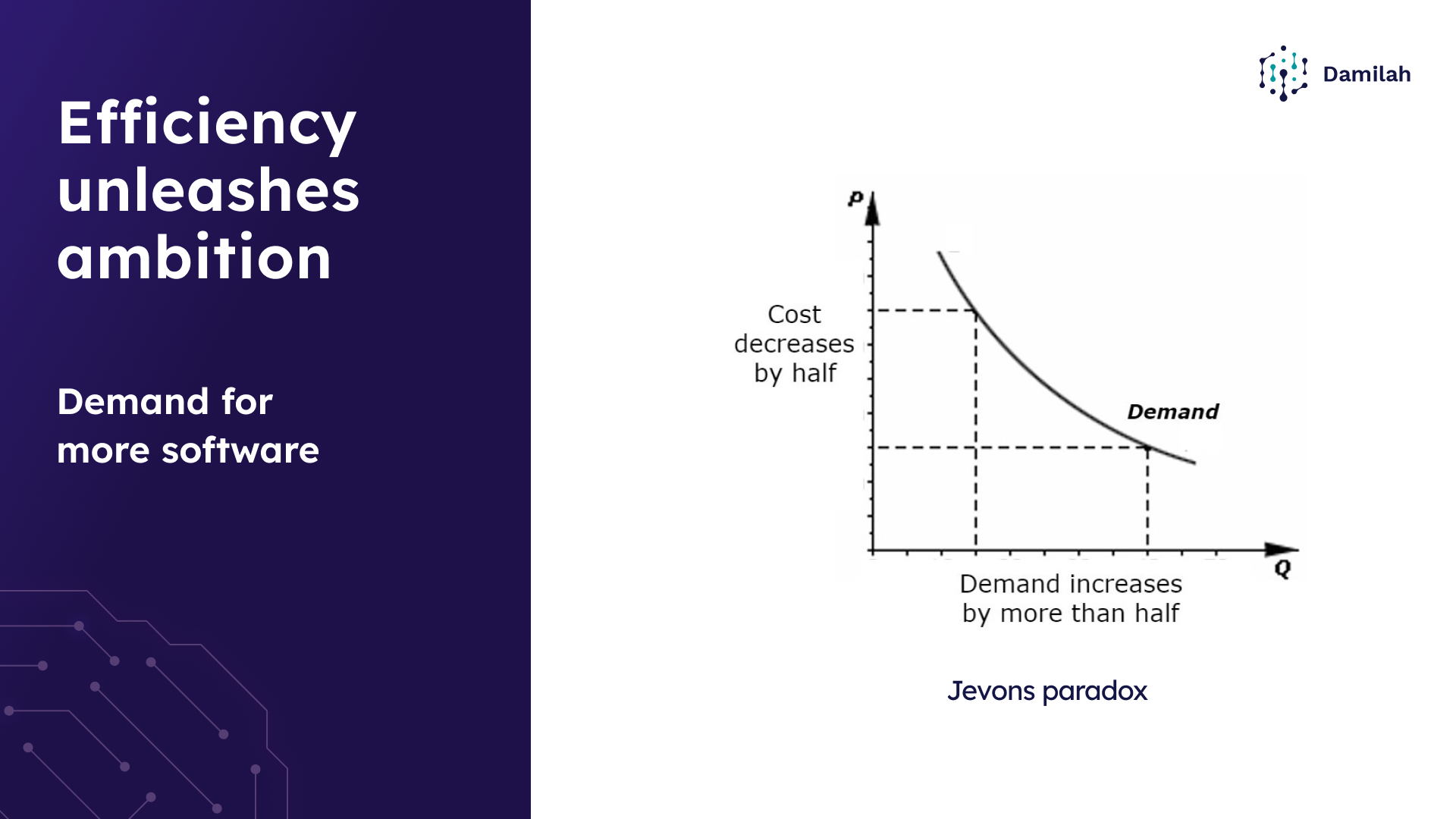
There has always been latent demand for more software in product software companies. AI removes the barrier to product creation by creating code at lightning speed, leading to increased demand.
This all paints a rosy picture… so what’s going to slow us down?
Capability gap: Engineering is faster than ever, making leadership harder. AI adoption is a change management process.
Operating model gap: In such a fast-changing environment, standards and process can’t keep up. There are fragmented tools and shadow AI usage.
Governance gap: Compliance and security concerns, IP leakage and other risks are emerging. Accountability and ownership are unclear.
We can’t simply lock down AI – so how do we, as CTOs and technology leaders, control what’s going on?
“The problem with autonomy without alignment is that it doesn’t scale.”
The path to engineering orchestration
As competition, stakeholder expectations, and advances in AI technology increase, we need to facilitate the safe adoption of AI technologies. We need to create an environment where we won’t get in the way of progress and increased productivity. But we need to take safety, compliance and consistency seriously.
Technology leaders need to change the way we work: we need to move to a model of engineering orchestration. This means using a platform that allows us to manage the use of agentic AI workflows while retaining oversight and control over what is produced.
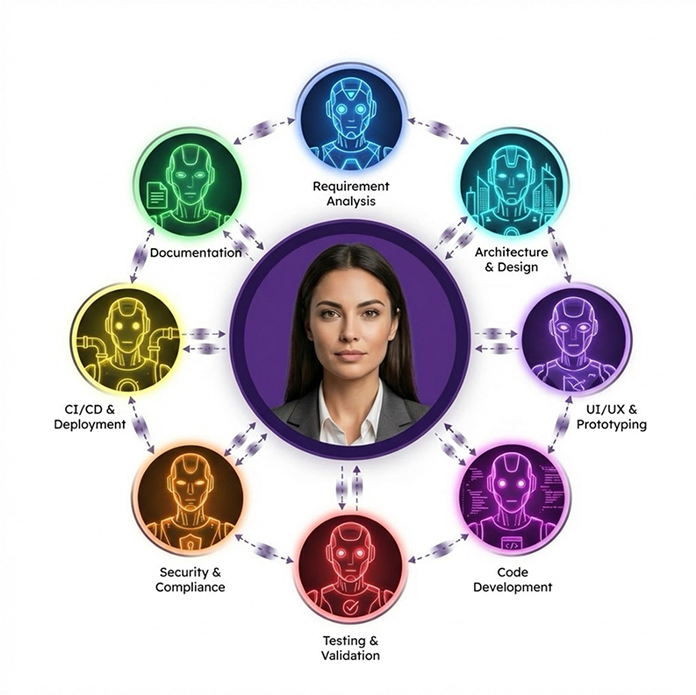
The human controls agentic workflows across every aspect of the software development lifecycle (SDLC). All standards, such as technical, regulatory and design systems, are included in the orchestration platform. This is the shift from doing work to designing systems that do work.
Changing skills priorities
As engineering teams become orchestrators, team sizes will reduce and individuals will become more versatile. New roles will appear such as Product Engineer – engineers who understand customer/end-user needs, as well as being able to orchestrate the solutions. Other Engineers need to develop system thinking. They need to understand the bigger picture around architecture, non-functional requirements and design patterns.
As development cycles shrink, miscommunication will have an even greater negative impact, so leaders need to consider cultural differences, as well as time zone and proximity even more carefully.
“Being fluent in AI is becoming as important as being able to type on a keyboard.”
Skills needed are evolving. Prompt engineering is a basic need for people involved in software engineering. A key differentiator will be commercial understanding: really understanding the value we bring to our companies and customers. The best engineers will be creative and curious – exploring what’s possible and approaching problems from a different angle.
The “human moat” surrounding orchestration and governance is a set of unique, irreplaceable human skills: strategy, leadership, empathy, ethics and creativity.
Our role as leaders is to hire for, grow and retain these skills, understanding that our own role is being redesigned. We need to:
Move on from managing tasks to designing systems
Raise AI fluency across our organisations
Strengthen governance without slowing innovation
Build product-focused, commercially aware teams
What AI orchestration looks like in practice
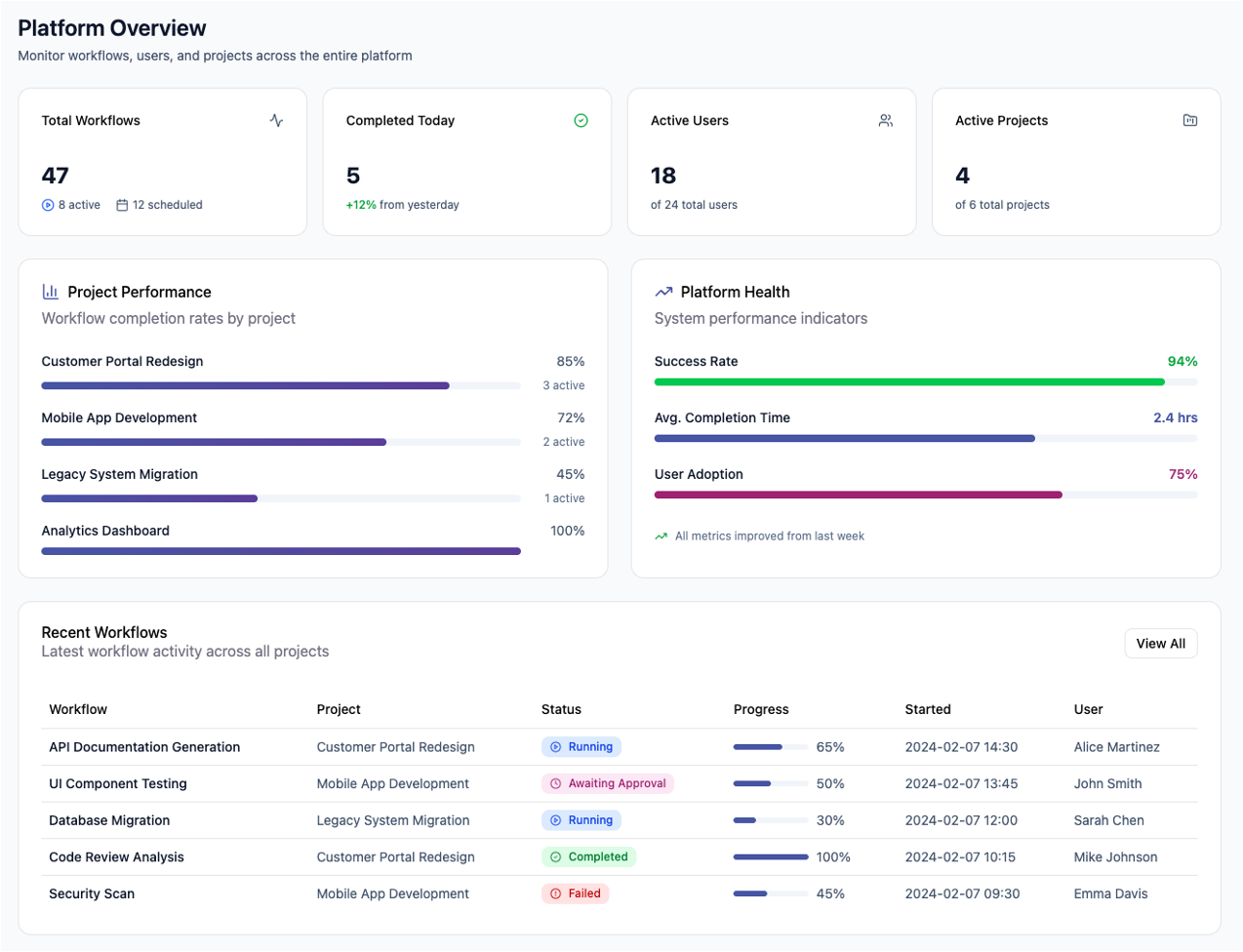
Our CTO, Aleksandar Karavasilev, demonstrated to the CTO Craft community Damilah’s multi-agent platform (DMAP) to bring AI orchestration to life. Here are the principles behind our AI orchestration platform:
Start with context, not prompts DMAP begins with an explicit project context: the technology stack, governance constraints, standards, and which models handle which tasks. Every agent working on your project operates from the same rules.
Run work through a structured workflow DMAP supports agentic workflows within all stages of the SDLC, such as requirements, design, development, testing and validation.
Humans in the loop by design Work can be paused, reviewed, approved or rerouted at any stage. You define where human sign-off is required, what a pass looks like, and who is accountable.
Every decision is auditable DMAP keeps a full record of what ran, what was produced, what a human approved, and why anything was rerouted.
Cost management With model costs changing often, it is critical to monitor token usage and costs. DMAP includes this on a dashboard for full visibility and control.
Engineering 2028 Leading Human + AI Teams Responsibly
A joint Damilah & CTO Craft survey of senior technology leaders
Those who are continuing to add AI on top of their existing SDLC, relying on experienced people to absorb the extra review and governance load, will soon struggle. Those who redesign how work flows through the system entirely will remain competitive.
At Damilah, we are helping companies understand the barriers to AI orchestration. If you are looking into making the change, get in touch today to set up a conversation with me and the team.
Iain Bishop CEO, Damilah
Watch the recording
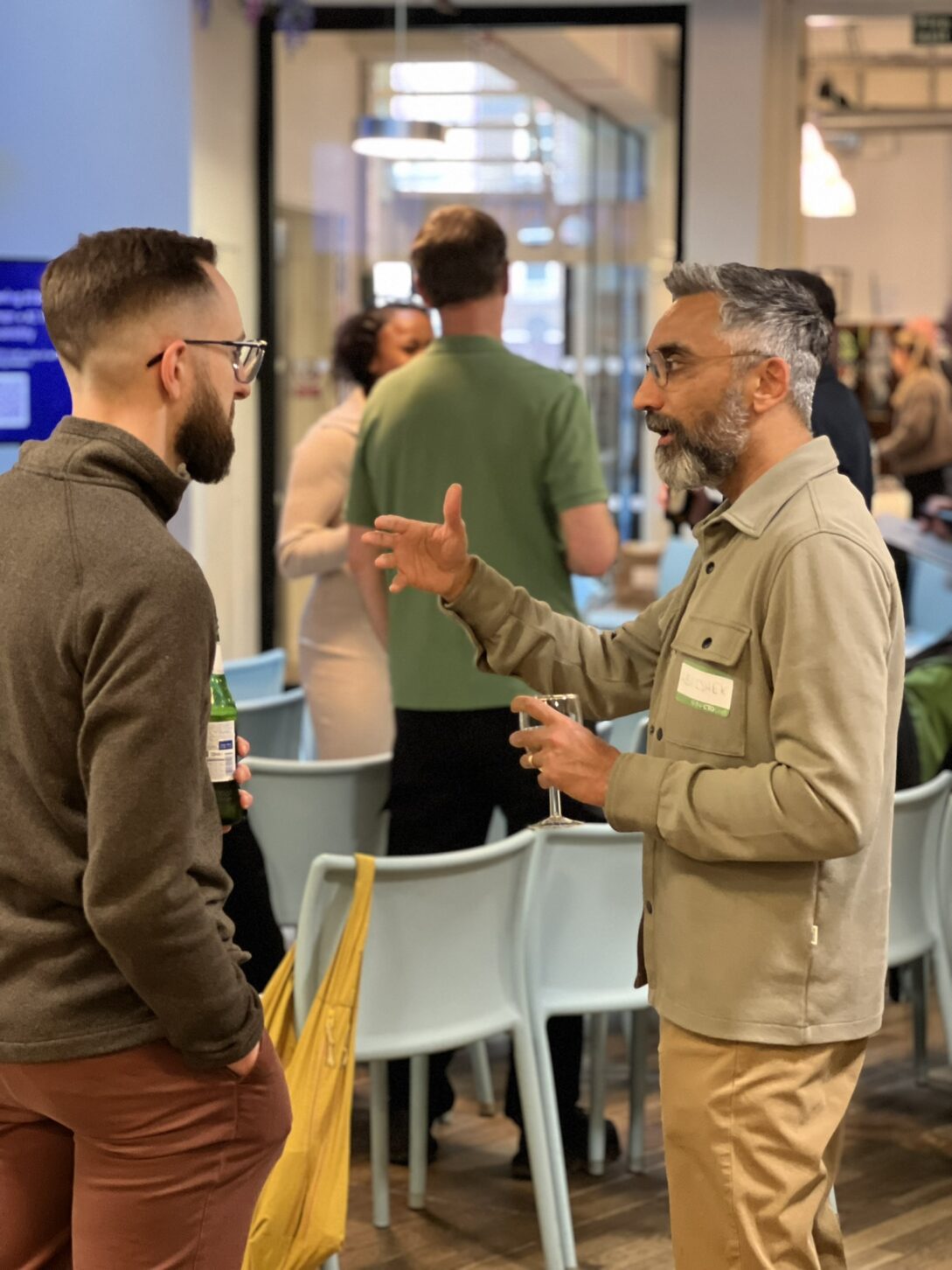
CTO Craft Con London felt different this year. A year ago, discussions were around AI pilots, with people getting excited about the companies who were taking the next step with AI.
This year, there was a mix of nervousness around the dramatic changes we are already seeing and competitiveness amongst those who were steaming ahead (primarily AI-native start-ups).
We partnered with CTO Craft to survey technology leaders about how engineering might look in two years’ time, leading to the report, Engineering 2028: Leading Human + AI Teams Responsibly. What struck us at the London conference was how closely the report aligned to what so many people told us about their experiences.
“The shift in mindset over the past year has been striking. At CTO Craft 2025, many leaders were still cautious about AI and how it would impact our industry. This year, everyone agreed that AI is already changing the industry, and at speed. After only a year, we’re mostly hearing about how companies are using AI in practice.” – Aleksandar Karavasilev, CTO at Damilah
Headcount is not shrinking as AI increases output
According to our Engineering 2028 report, increased AI-enabled productivity drives increased demand for more software. Ideas that were sitting in a “maybe later” pile are becoming viable and roadmaps are rapidly stretching. Companies need to maintain their headcount to keep up with the latent demand for new features and products.
The CTOs we met at CTO Craft were from a range of companies. Those at investor-backed software companies largely agreed with what was said in the report, as they face increased pressure to deliver AI-based solutions. At more established or non-software companies, issues were still around legacy systems preventing advancement with AI, meaning humans are more in need than ever. And at the opposite end, there were software start-ups with a couple of people able to create a brilliant product from scratch with AI, which would have previously taken months and a critical mass of software engineers.
Speed is shifting the bottleneck in the SDLC
“For so long, engineering has been the bottleneck in the software development lifecycle (SDLC). As that constraint starts to ease, pressure moves into other parts of the lifecycle, especially discovery, alignment, and review.” – Iain Bishop, CEO at Damilah
In Iain’s talk at CTO Craft, he highlighted the findings of the report Engineering 2028 around AI transforming the SDLC. New features or products are possible to generate in a fraction of the time with fewer people involved, but they are not perfect and not necessarily built for purpose. So, while AI rapidly accelerates code creation, removing a major bottleneck in the SLDC, when it comes to code review, we see new delays.
Moving towards AI orchestration
This displaced bottleneck is changing how software engineering teams work every day and how they are structured. In our Engineering 2028 report, organisations earlier in their AI journey reported using AI to help engineers move faster on individual tasks. Organisations further along the journey are redesigning the teams altogether.
“Many of the presentations I saw at CTO Craft validated and reinforced our view that the future of engineering is orchestration. Companies are increasingly using AI platforms to support how work flows through teams.” – Iain Bishop.
Software engineers need to become “AI orchestrators”, setting tasks for multiple agents. The need for human review of AI’s output increases, as well as checking agents’ processes throughout the development process.
Engineering 2028 Leading Human + AI Teams Responsibly
A joint Damilah & CTO Craft survey of senior technology leaders
An interesting talk from Sonar compared the difference between different LLMs when it comes to creating code. Newer models create significantly more lines of code. And the more code you produce, the more bugs will be produced. Sonar proved this and, while the bugs were minimal, they do stack up when it comes to writing millions of lines of code in seconds. This means newer LLMs inevitably produce more bugs.
So, speed is improving, but quality is not automatically keeping pace. This backs up what respondents felt in our survey with CTO Craft, where only 8% are seeing AI generate higher quality outcomes. More code means more to review, so governance needs to accelerate in line with the speed of AI’s coding. Governance needs to be built into how teams operate from the start.
What AI cannot replace
As Iain said in his talk: “AI builds the how. We own the why.”
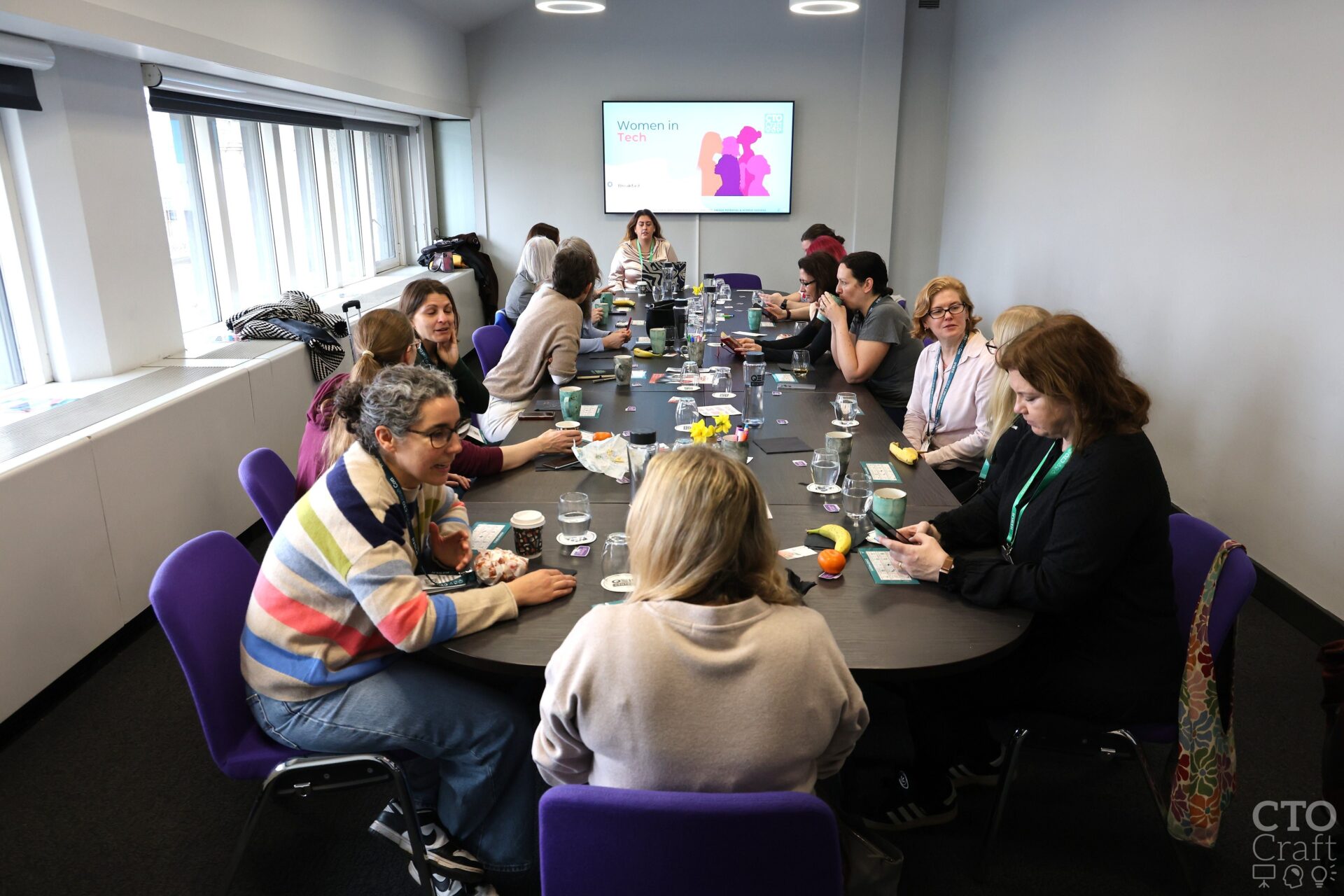
The combination of judgement, strategy, empathy, and a deep understanding of both the customer and the business determines whether good work gets built at all. After the Women in Tech breakfast, Damilah’s Head of Marketing, Julia Valentine, reported:
“One woman I spoke to said that ‘soft skills’ sounds like ‘easy’, i.e. the opposite of hard. But the one thing AI can’t do is ‘soft skills’. People who excel at soft skills (these days, often women) will be more desirable in tech leadership than those with ‘hard skills’, such as coding. Could this be an opportunity to seize gender equality in tech?”
AI is highly effective at execution, but it does not understand context in the way people do. It does not carry accountability, nor does it understand what matters most to the business or customers.
As Hywel Carver, CEO at Skiller Whale, put it: “The one thing AI cannot do that humans can is empathy.”
How engineering teams are evolving
As AI takes on the kinds of tasks engineers used to focus on, engineers now need to get a better grasp on product, even transforming from software engineers into product engineers. This means understanding what both customers and what the business want to achieve, connecting technical decisions to commercial outcomes.
Leaders need to understand this shift to develop the right people in their teams, as well as hire the right people into new roles that may arise. CTOs’ and CPOs’ roles are becoming more closely aligned, and we are seeing the rise of the CTPO role.
As Iain put it in his talk, “Engineering in 2028 isn’t a tooling upgrade. It’s a leadership redesign.”
The organisations that come out ahead over the next few years will be those that have genuinely rethought how their teams are organised around them: moving from the focus on AI tools to AI orchestration.
Engineering 2028: Leading Human + AI Teams Responsibly
A joint Damilah & CTO Craft survey of senior technology leaders
We commissioned this survey with CTO Craft to understand how senior technology leaders see engineering roles and skills evolving by 2028.
We chose 2028 deliberately: it’s far enough beyond operational planning to require leadership thinking, but close enough to demand action now.
Here’s a summary of the report. Download your copy today to understand how you can apply the findings to your own organisation and be prepared for systemic change.
Everyone’s using AI
92% of survey respondents reported to be already using AI and seeing benefits.
Most do not expect AI to shrink their teams; they expect it to increase output. Productivity is increasing, which in turn drives demand for more products and software.
The bottleneck is shifting
For years, engineering speed has been the main constraint when it comes to software development.
AI has almost removed this constraint, so that now the bottlenecks are around idea discovery, review, governance, and alignment.
From augmentation to orchestration
Less experienced leaders see AI as augmenting existing roles and skills.
Those with more extensive AI experience have higher expectations of AI’s impact and envisage teams becoming AI orchestrators.
This means moving from single tools to multi-agent platforms, where deep expertise will be less important than a breadth of understanding.
The “human moat”
AI excels at execution: the “how”.
Humans remain responsible for the “why”.
As AI capability increases, leadership capability becomes even more important. The “human moat” surrounding AI and governance comprises skills such as strategy, context, empathy and ethics, as well as commercial judgement.
Inside the Full Report
Download the complete survey findings to explore:
How productivity gains are expanding demand rather than reducing teams
Where bottlenecks are shifting across the software development lifecycle
Why governance and organisational consistency are increasingly critical
The new roles leaders expect to emerge by 2028
Engineering 2028 Leading Human + AI Teams Responsibly
A joint Damilah & CTO Craft survey of senior technology leaders
We all know that AI is transforming the way software is developed. But how many of us are clear on exactly what kinds of business benefits it can deliver? We wanted to develop a better understanding of this, to ensure we maximise the productivity and quality gains AI is able to deliver, and also to…
One of my first experiences with AI was revealing, even though it wasn’t in a professional context. My child was unwell with a cough and I’d heard that putting a chopped onion in the room can help to alleviate the symptoms, but wasn’t sure if it was just myth. So I asked ChatGPT this question:…
First, I should start with a confession: we recently managed to annoy a dozen of our software engineers. That’s because we ran a hackathon to test the gains that could be made through the use of AI. To benchmark the results, we needed some of our developers to work in a control group, using traditional…
Subscribe to our newsletter
Sign up for our newsletter to get regular updates and insights into our solutions and technologies