
Introduction
Totalmobile is a leading provider of workforce management and rostering software. It serves some of the UK’s most operationally demanding organisations, from airports and emergency services to logistics networks.
Since 2024, Damilah has worked with Totalmobile on a variety of projects, culminating in holding a central role in Totalmobile’s most ambitious initiative yet. Together, we are building a comprehensive rostering platform for one of their most strategically important clients.
“Damilah earned our trust on some of the most demanding rostering projects in the UK, including emergency services, airports and critical infrastructure.” – Jon Woodforth, CTO, Totalmobile
Rapid growth risks instability
Totalmobile’s rostering platforms are honed to perfection. Their customers depend on the complex allocation of people being in the right place at the right time. In the case of ambulance or firefighting services, consequences to this going wrong are more than your average software scenario.
As one of the fastest growing rostering companies, Totalmobile faced common acquisition challenges. Rapid growth brings with it the risk of instability and can compromise business as usual processes.
Totalmobile’s key priorities included:
- Fix and protect their most important rostering workflows, such as shift swaps, pattern design, and working time rule enforcement
- Maintain API reliability, admin tooling, integration capabilities, and test automation
- Stabilise and, where relevant, modernise newly acquired rostering platforms

Totalmobile needed a trusted delivery partner who could support across the full software development lifecycle (SDLC). Their goal is to create an integrated rostering platform so, as well as breadth of capability, they needed someone with deep rostering domain expertise.
Choosing Damilah as a trusted partner
Totalmobile has worked with Damilah on a variety of projects since 2024. The first set the pattern for those that followed. Totalmobile engaged us to meet a hard commercial deadline for a major airport. We delivered fixes across ruleset creation, shift swap workflows, UI/UX, and role-based permissions. We took on additional scope beyond the original brief, including new search and filter capabilities, multi-shift assignment workflows, and reporting improvements.
“Damilah’s team goes beyond achieving projects on time – they take ownership and pride in projects, acting as one team with ours.” – Ben Fearn, Head of Software Engineering, Totalmobile
The projects that followed gave Damilah the opportunity to support the entire SDLC. From integrations and API reliability through to accuracy in audit processes and simplifying technical structure. We supported highly specialised rostering platforms by improving allocation accuracy, reporting, breach handling and complex regional staffing rules.
As Totalmobile shapes its most ambitious initiative to date, Damilah is again supporting across the SDLC. This involves merging two major rostering solutions into a single platform capable of serving multiple sectors and large-scale enterprise clients. The platform is being built with one of Totalmobile’s most important clients in mind. We are shaping architecture and proof-of-concepts, establishing the QA frameworks that will underpin quality for the life of the product, and bridging knowledge between legacy platforms.
Repeatedly proving value
Across four major projects spanning more than two years, the partnership has delivered measurable, compounding value for Totalmobile:
- On-time delivery of the airport rostering rollout secured a key client relationship and opened the door to expanded engagement
- Workflow defects resolved across core rostering platforms, reducing operational friction and support burden for Totalmobile and their end users, freeing operational staff for higher-value work
- Stronger permissions, validation logic, and automated testing lowered the risk of costly errors and reduced administrative overhead
- Platform modernisation, API strengthening, broader test coverage, and the upcoming rostering programme are positioning Totalmobile for sustainable growth
With Totalmobile, Damilah has proven our ability to support any area of the SDLC and demonstrated our extensive rostering domain knowledge. With the modernisation and unification of its rostering platforms, Damilah will enable Totalmobile to cement its position as the leading rostering solution, as well as opening doors to new opportunities with AI.
I remember examining one trust’s rules on preventing staff from working too many long days in a row. These rules keep patterns safe, but they aren’t one-size-fits-all and often require a more nuanced approach. For example, a high-intensity inpatient ward needs much tighter guardrails than, say, a 9-5 community service.
And that means everything can get very complex, very quickly.
Until now, trusts have frequently needed to find workarounds to accommodate such scenarios, since most software providers don’t offer this level of configurability – largely because older legacy systems simply can’t manage that kind of complexity.
But, recently, we’ve been asking ourselves: do we need to be so rigid? Particularly because the integration of AI into software development processes is opening up a whole new world of possibilities that can help providers solve challenges like these.
So, we’re now experimenting with automation that uses AI to let units set their own workflows without needing a developer to change the core code. The goal here is to build a system flexible enough to handle such demands – turning what used to be a technical blocker into a genuine innovation.
Leaning into the challenges
The kind of challenge and solution outlined above is just one example of the way AI is starting to become a powerful problem-solving tool for rostering software providers.
In our experience, the most common challenges are:
- Inherited technical debt: Providers often find themselves dealing with outdated legacy systems or needing to re-platform the whole system. This can feel like that well-used analogy of changing the engine on an aircraft while it’s still flying.
- Integration and interoperability: To reduce complexity and ease end users’ workloads, it’s vital for rostering systems to integrate seamlessly into other operations, such as HR, finance/payroll and compliance.
- Security and compliance: Since many end users are working in essential services, getting this right, so it’s easy to ensure staffing levels are always correct, is non-negotiable, both ethically and legally.
- End-user reassurance: Typically, administrators can find it hard to visualise the solutions they need, or may have little trust in technical solutions as they’ve been let down previously. It’s vital, therefore, to have the capability to work closely with users to give them the confidence they need.
- Scaling quickly and effectively: Often rostering platforms will need to scale rapidly – which can be highly challenging if they’re built on outdated or niche technology.
These real-world headaches mean that, all too all too frequently, many end users have to struggle with inflexible, underperforming tools or the burden of manual admin, while managing unpredictable demand, unforeseen scenarios and frequent last-minute changes.
A better way of rostering
Based on our experience of working closely with rostering software providers, we have a clear picture of these major pain points and how such issues are all too common across many industries.
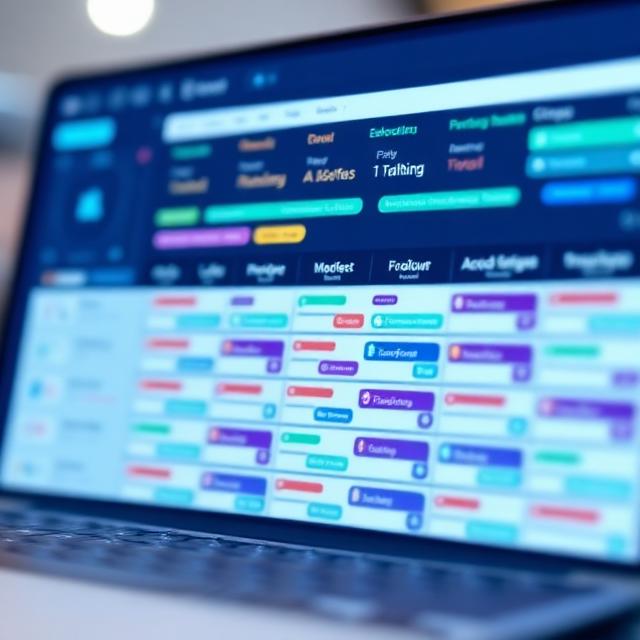
But we also know there’s another way, where AI tools can provide simple, rapid and adaptable solutions that allow workforces to focus on their core competencies rather than hours of admin.
In general, effective, future-ready rostering must therefore be highly configurable, in order to adapt to those varying requirements. It must be able to flex to sector-specific constraints. And it must support different models – such as filling time-based slots (perhaps hospital shifts) versus filling service needs (such as when planning a higher education institute’s timetable).
To achieve outcomes like this, AI tools offer the opportunity to massively shorten feedback loops when developing and iterating new versions of existing systems. It’s even possible for providers to undertake rapid prototyping and validation in a live environment. This could involve working directly with end users to build multiple iterations of a system in order to demonstrate exactly how a solution will work in practice.
Additionally, AI’s ability to analyse vast data sets can deliver valuable predictive analytics, such as an understanding of when staff absences or customer/patient demand are most likely to be at their peak. Based on historical data patterns, it can make intelligent suggestions for administrators to choose from.
Or, as in the example at the beginning, AI’s capacity to take on previously impossible challenges enables developers to solve major technical problems that previously would have been considered far too time-consuming and financially unfeasible. An AI-powered tool can also help to ensure rostering is done as fairly as possible, without any human biases. With a good dose of transparency, it can show staff how and why rostering decisions are made so no one feels they are being singled out for unfair treatment – for example, by demonstrating that everyone will end up working an equal number of public holidays throughout the year.
Human accountability

Despite the undeniable advantages that AI can bring to rostering tools, for the foreseeable future there will always need to be human involvement throughout the process. The overriding aim should be to improve productivity by reducing development or admin time, rather than to replace human judgement.
In the first instance, we would always recommend that AI features be introduced gradually into rostering tools and with full transparency – not only to ensure maximum effectiveness, but also to help build trust among users.
Before moving to anything near full automation, a tool should offer explainable alternatives to users – for example, by suggesting several options with a rationale of why it has proposed each one. It would then be up to the human administrator to select the most appropriate, all the while helping the AI to learn what works best in that specific organisation’s context.
Transparency and explainability are also crucial when it comes to ensuring all outputs lead to full compliance, particularly in sectors like healthcare and education, where regulatory observance and safety are critical.
The path forwards
The future of AI-powered, demand-driven rostering and rostering software development – using systems that are accurate, compliant and sensitive to end users’ needs – is now within reach.
To get there, it requires a highly collaborative approach between end users and software developers who have in-depth product and domain knowledge and are powered by expert engineers with advanced AI skills.
To find out more about how we can help you remove the pain from rostering software development with our AI-powered solutions, get in touch now.
Iskra Ristovska, Principal Product Owner at Damilah