
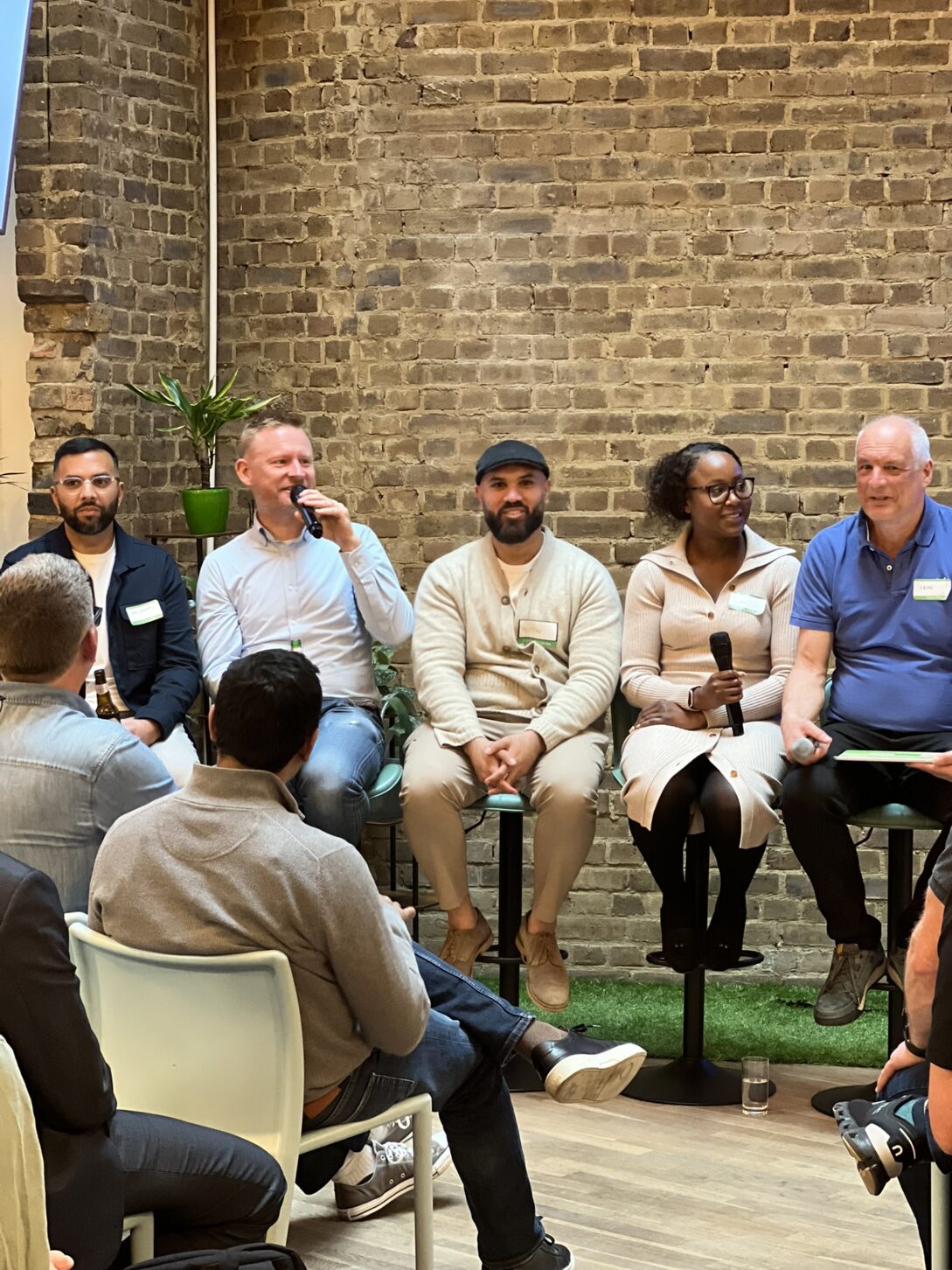
Fifty people watched the panel discussion in London in May 2026 on the theme of Engineering 2028: A Leadership Masterclass. Chaired by Iain Bishop, the panel included:
- Lucinda Faucher, VP of Product at Valve (platform for sales, marketing and distribution for flexible workspaces)
- Alttaf Hussain, Director of Engineering & AI Innovation at Yoti (platform for privacy-focused identity and age solutions)
- Vishal Manani, CPTO at Eckoh (platform securing sensitive data in contact centres)
- Chris Parsons, CTO and independent consultant, writer & AI strategist
Where to start with AI orchestration
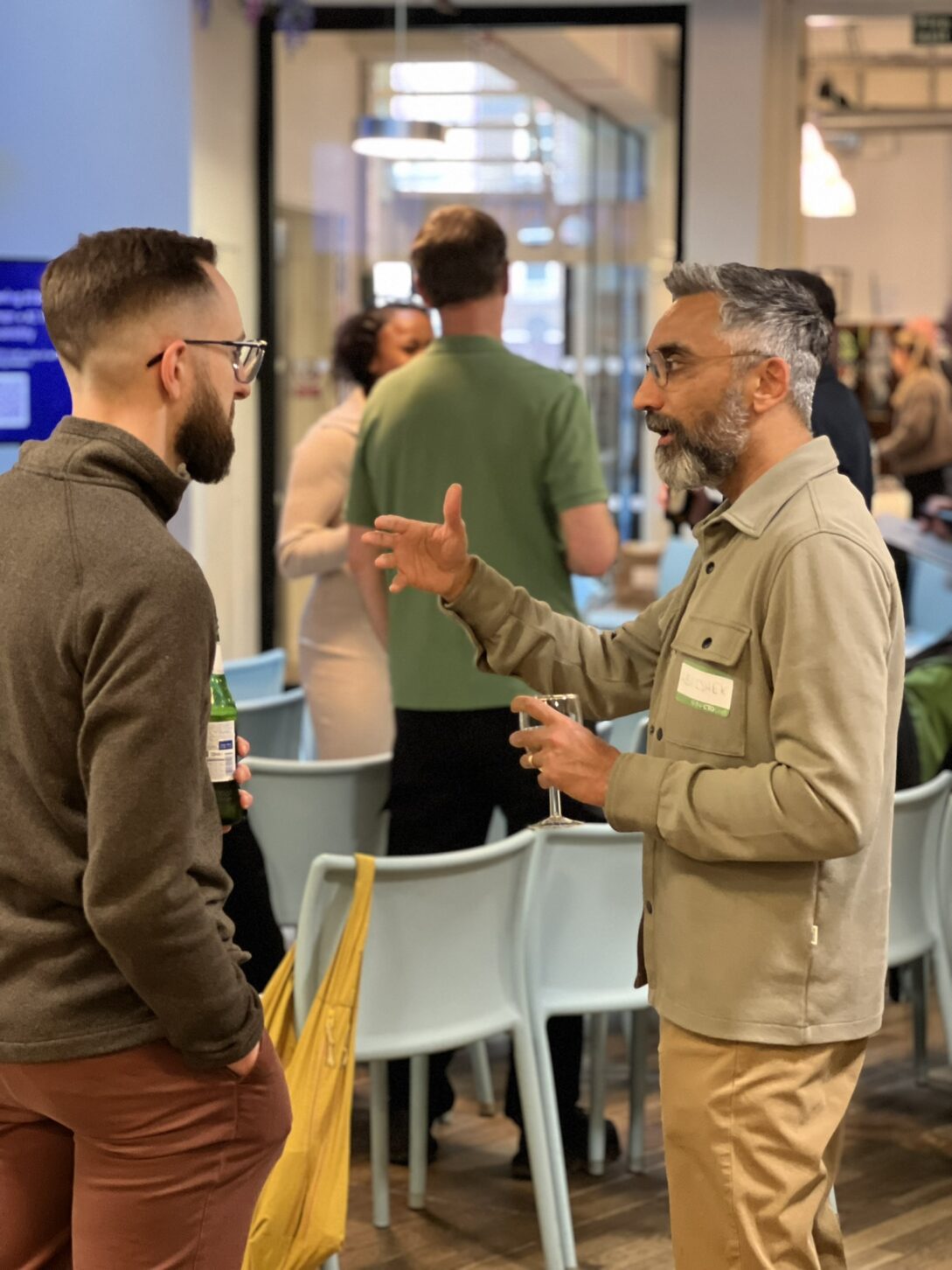
A theme that continued throughout the session through to the final questions was how to get teams on board with AI orchestration. Vishal Manani gave the example of his software engineering colleague, describing his role as similar to an artisan baker’s. The colleague was loathe to become a machine operator making white sliced bread. While this example is of someone who respects their trade and the outcomes from his work, the panel knew of others who simply enjoyed coding for the sake of coding.
Leaders need to understand the motivations of individuals in their teams to bring them on the AI journey. As stated in our Engineering 2028 report, the demand for software is growing with the rise in productivity gains from AI. However, no one shied away from the fact that some people will lose their jobs. Those who are using AI now have a greater advantage and will succeed longer term.
Engineers’ roles are changing rapidly. Job descriptions still haven’t changed but engineers must accept that they will spend most of their time refining agents rather than writing features directly. Those who refuse this kind of role will eventually need to look to other professions, as traditional engineering roles disappear.
This doesn’t mean giving up. Leaders can have a huge impact on adoption rates. Encourage those who have embraced AI early on to become AI champions in the team. Given them the licences they need to try out what they want to do. Then get them to share their successes. This kind of positive reinforcement is a tried and tested method of increasing technology adoption, and it works with AI too.
Speed vs quality
The tension between speed vs quality with AI is widely discussed. The software development lifecycle (SDLC) is changing, with bottlenecks moving from coding to reviewing.
“We are in a point in history where you can go from vibe coding to production at blistering speed.” – Alttaf Hussain, Director of Engineering, Yoti
Especially in private-equity backed companies, AI is being jumped on to pick up the pace of software creation. However, the panel was concerned that what comes before and after code generation has not kept pace. Requirements, review and governance are still reliant on humans. With AI possibilities of creating more code than ever, organisations need to consider that there is still a barrier to achieving results at speed, unless we want sub-standard products.
Human oversight will still be critical for the foreseeable future, as AI’s limits with judgement are clear. One example shared by Vishal Manani was of an AI agent writing brittle test and then changing the application’s code to make the test pass. This caused an outage. You can speed up one area of software development, but it will result in other areas slowing down.
The human moat
When asked about what stays with us, the humans, the panel agreed on one area above all: accountability.
“When things go wrong, who owns it, monitors it, reviews it?” – Lucinda Faucher, VP of Product, Valve
Chris Parsons referenced Tristan Harris’ documentary as an extreme example of where lack of accountability can lead to with AI. If companies argue that they are not responsible for someone’s “AI psychosis”, despite creating the AI caused it, who takes responsibility for disastrous consequences?
Traditionally, the person who writes the code takes responsibility for its accuracy. With AI, the lines are blurred. It can build fast, but it might build entirely the wrong thing. Again: the SDLC bottleneck is simply moved – not eliminated. AI needs regulatory compliance and security oversight built in from the start, with a “human in the loop” throughout the SDLC.
Measuring success
According to Lucinda Faucher, nothing has really changed when it comes to measuring success. Metrics like revenue generation and customer satisfaction is what any business and its stakeholders will care about. Ultimately, what we build needs to solve our customers’ problems. Otherwise, what’s the point?
A question came in from the audience around token usage being used as a measure of success by Meta, and whether the panel saw that as a good metric. Chris Parsons disagreed – proxy metrics may be useful to measure steps to getting to where you need, but technical metrics don’t have the same meaning any more. Bottleneck identification is more critical to address than lines of code or token counting.
Engineering 2028 Leading Human + AI Teams Responsibly
A joint Damilah & CTO Craft survey of senior technology leaders
Five top tips to implement AI orchestration
The panel’s recommendations around AI orchestration were relevant to any organisation. Here are the five top tips we summarised from the event:
- Start with low-risk, controlled workflows in non-safety-critical areas, as AI is still not ready to review AI-generated code without humans in the loop
- Build evaluation frameworks before scaling AI adoption, as AI output is non-deterministic, and decide “what good looks like” before implementation
- Create an AI champion programme, led by your early adopters, to bring more of your people on the AI journey
- Focus on your requirements quality and formalising human checkpoints to speed up the SDLC
- Establish clear governance and accountability structures with your leaders and stakeholders from the start, as you can expect things to go wrong sometimes
Following the event, several people felt that the conversation was just getting started. How do we persuade our leaders and stakeholders that we may need to slow down to go faster? How do we get consensus on “what good looks like” before implementation? If you’re a technology leader who would like to discuss practical next steps around leading human + AI teams responsibly, follow our Linkedin and to hear about our events before anyone else.
To introduce the Byte, I shared findings from our Engineering 2028 survey. Almost all survey respondents were already using AI. Half reported the greatest benefits in AI being increased speed and innovation.
I shared how productivity expectations are rising more sharply among teams that have more AI experience. This lies in contrast to the usual technology “hype cycle” trends, where increased utilisation leads to disillusionment.
Teams tend to start using AI tools following a co-pilot model. They use them to accelerate the way they have always worked, but as experience increases, they find new ways of working to fully utilise the AI tools.
There has always been latent demand for more software in product software companies. AI removes the barrier to product creation by creating code at lightning speed, leading to increased demand.
This all paints a rosy picture… so what’s going to slow us down?
- Capability gap: Engineering is faster than ever, making leadership harder. AI adoption is a change management process.
- Operating model gap: In such a fast-changing environment, standards and process can’t keep up. There are fragmented tools and shadow AI usage.
- Governance gap: Compliance and security concerns, IP leakage and other risks are emerging. Accountability and ownership are unclear.
We can’t simply lock down AI – so how do we, as CTOs and technology leaders, control what’s going on?
“The problem with autonomy without alignment is that it doesn’t scale.”
The path to engineering orchestration
As competition, stakeholder expectations, and advances in AI technology increase, we need to facilitate the safe adoption of AI technologies. We need to create an environment where we won’t get in the way of progress and increased productivity. But we need to take safety, compliance and consistency seriously.
Technology leaders need to change the way we work: we need to move to a model of engineering orchestration. This means using a platform that allows us to manage the use of agentic AI workflows while retaining oversight and control over what is produced.
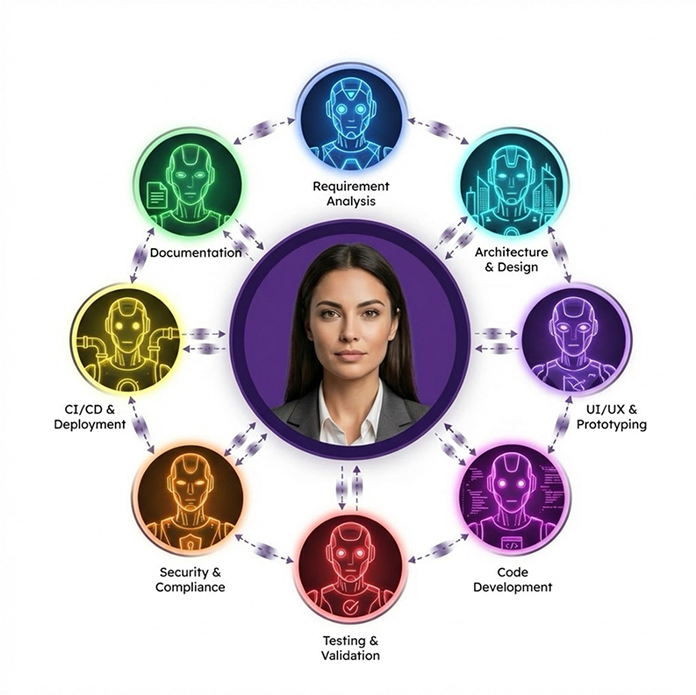
The human controls agentic workflows across every aspect of the software development lifecycle (SDLC). All standards, such as technical, regulatory and design systems, are included in the orchestration platform. This is the shift from doing work to designing systems that do work.
Changing skills priorities
As engineering teams become orchestrators, team sizes will reduce and individuals will become more versatile. New roles will appear such as Product Engineer – engineers who understand customer/end-user needs, as well as being able to orchestrate the solutions. Other Engineers need to develop system thinking. They need to understand the bigger picture around architecture, non-functional requirements and design patterns.
As development cycles shrink, miscommunication will have an even greater negative impact, so leaders need to consider cultural differences, as well as time zone and proximity even more carefully.
“Being fluent in AI is becoming as important as being able to type on a keyboard.”
Skills needed are evolving. Prompt engineering is a basic need for people involved in software engineering. A key differentiator will be commercial understanding: really understanding the value we bring to our companies and customers. The best engineers will be creative and curious – exploring what’s possible and approaching problems from a different angle.
The “human moat” surrounding orchestration and governance is a set of unique, irreplaceable human skills: strategy, leadership, empathy, ethics and creativity.
Our role as leaders is to hire for, grow and retain these skills, understanding that our own role is being redesigned. We need to:
- Move on from managing tasks to designing systems
- Raise AI fluency across our organisations
- Strengthen governance without slowing innovation
- Build product-focused, commercially aware teams
What AI orchestration looks like in practice
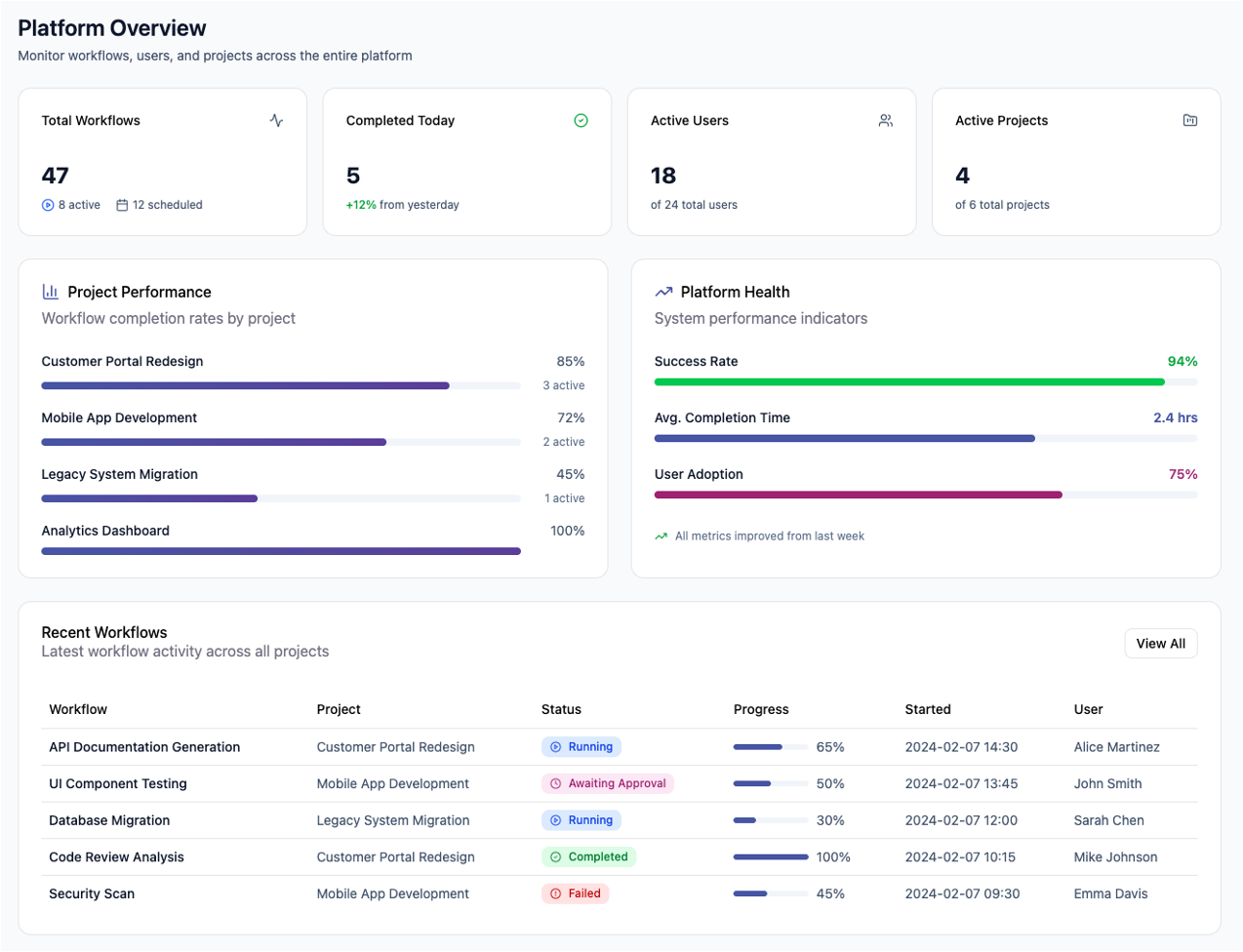
Our CTO, Aleksandar Karavasilev, demonstrated to the CTO Craft community Damilah’s multi-agent platform (DMAP) to bring AI orchestration to life. Here are the principles behind our AI orchestration platform:
- Start with context, not prompts
DMAP begins with an explicit project context: the technology stack, governance constraints, standards, and which models handle which tasks. Every agent working on your project operates from the same rules.
- Run work through a structured workflow
DMAP supports agentic workflows within all stages of the SDLC, such as requirements, design, development, testing and validation.
- Humans in the loop by design
Work can be paused, reviewed, approved or rerouted at any stage. You define where human sign-off is required, what a pass looks like, and who is accountable.
- Every decision is auditable
DMAP keeps a full record of what ran, what was produced, what a human approved, and why anything was rerouted.
- Cost management
With model costs changing often, it is critical to monitor token usage and costs. DMAP includes this on a dashboard for full visibility and control.
Engineering 2028 Leading Human + AI Teams Responsibly
A joint Damilah & CTO Craft survey of senior technology leaders
Take the next step towards AI orchestration
Those who are continuing to add AI on top of their existing SDLC, relying on experienced people to absorb the extra review and governance load, will soon struggle. Those who redesign how work flows through the system entirely will remain competitive.
At Damilah, we are helping companies understand the barriers to AI orchestration. If you are looking into making the change, get in touch today to set up a conversation with me and the team.
Iain Bishop
CEO, Damilah