
Our recent trivia night brought together colleagues from across the company for an evening of questions, debate and the occasional (very confident) wrong answer. Testing our knowledge of geography, football, science and pop culture was a great excuse to spend time together outside our usual routines, and the burgers and drinks helped too.
Whether people came ready to win or simply to have fun with their teammates, the evening was full of laughter, quick thinking and the spirit of friendly competition.
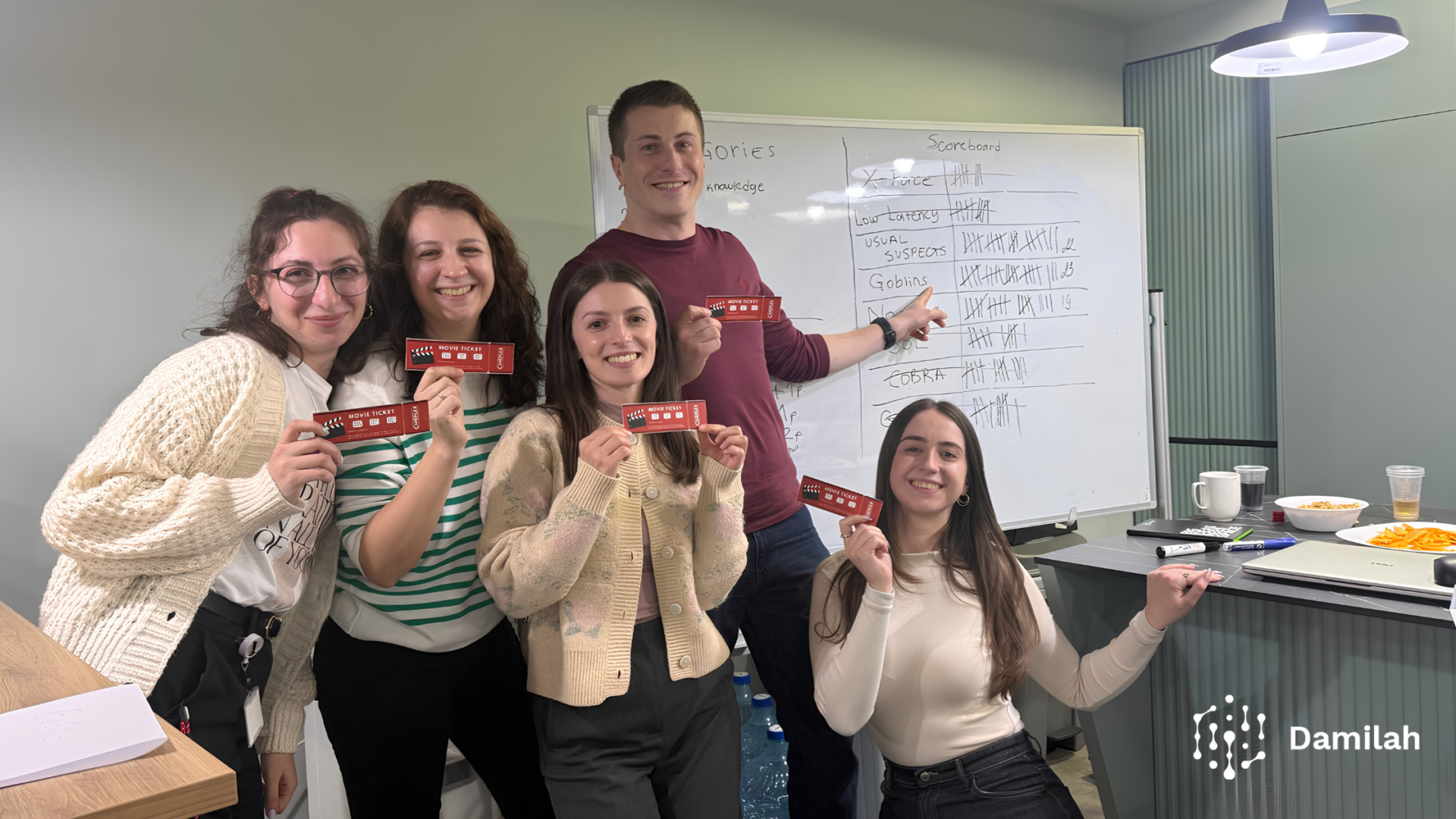
Then came the World Cup, which gave us another reason to get competitive. We set up a predictions board and a sweepstake so everyone could make their picks and follow the tournament with a little extra interest. The leaderboard became a running source of entertainment throughout the five weeks of competition.
A special congratulations to Aleksandar Karavasilev, who took first place in the sweepstake with Spain, and to Renata Todevska, our top Predictions Board player. It turned out that football knowledge is holding up nicely at Damilah!
What makes moments like these worth it
What we enjoy most about activities like these is the mix of people they bring together.
Colleagues who sit in different teams, work on different projects and may not cross paths much day-to-day end up sharing a table, debating answers and cheering on their sweepstake picks side by side.
These moments create the kind of familiarity that makes our team work well together. Getting to know one another outside of work helps us communicate more openly, support each other, and ask each other for help when we need it.
A good workplace is not only about getting the work done. It is also about enjoying the people you work with and celebrating these shared wins.
If you are curious about life at Damilah or thinking about joining us, check out our open positions here.
Our recent team building weekend in Ohrid was a great reminder of that.
The weekend began with a treasure hunt through the city. Teams worked together to solve clues, navigate Ohrid’s streets and enjoy a bit of friendly competition along the way. It was fun, but more importantly, it strengthened the trust, collaboration and teamwork that sit at the heart of our culture.
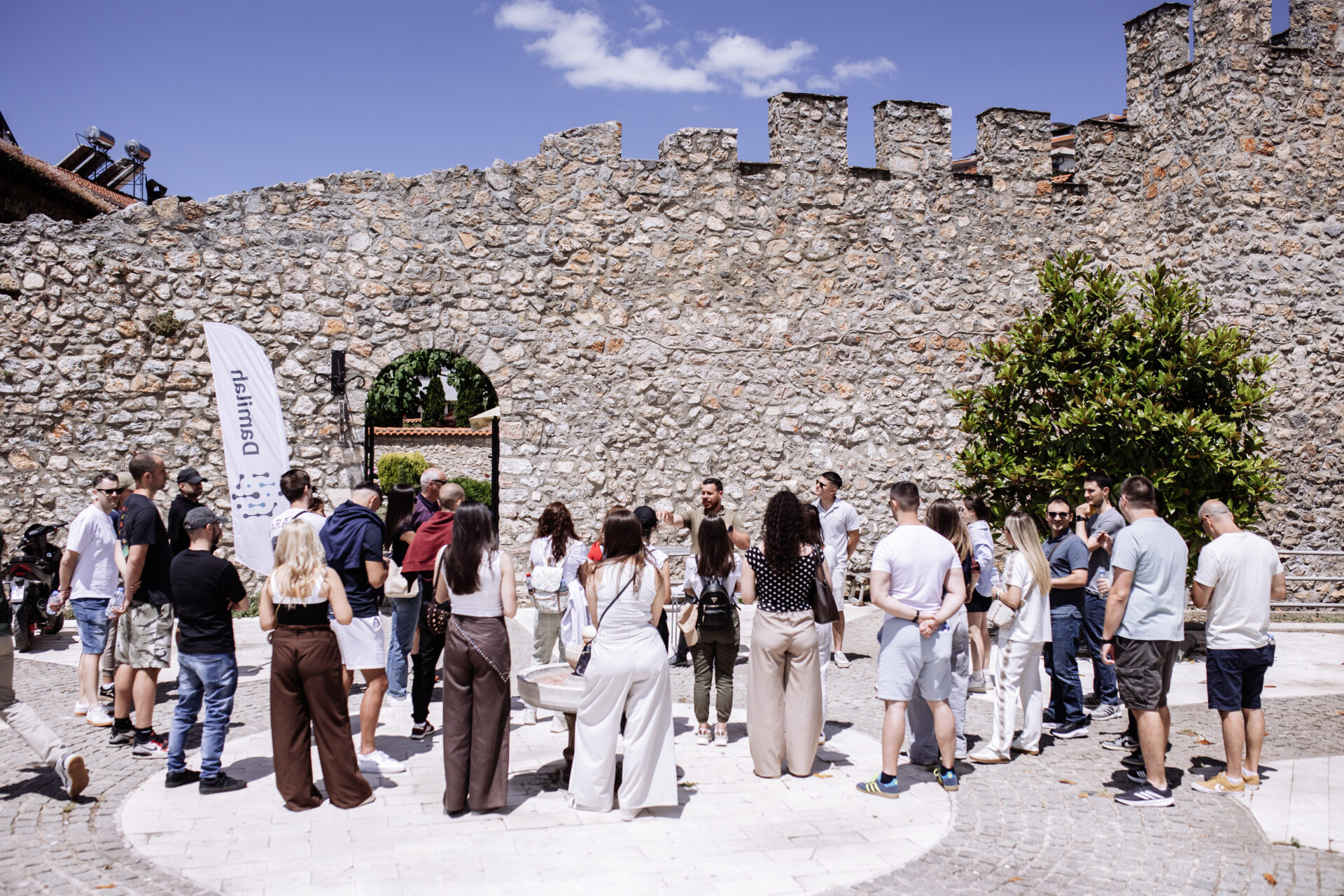

Later, we had lunch by the lake, taking time to talk, share stories and enjoy each other’s company outside our usual day-to-day work.
The weekend also gave us the chance to celebrate our people and reflect on everything we’ve achieved together over the past year. Hearing colleagues share project successes, milestones and lessons learned was a powerful reminder that behind every result is a group of talented individuals whose commitment keeps Damilah moving forward. Taking the time to recognise those contributions made the experience even more meaningful.
Celebrating who we are, not just what we deliver
One of the highlights of the weekend was our evening karaoke party on a boat. Between the music, laughter and unforgettable performances, it captured something we value deeply at Damilah: creating an environment where people feel comfortable being themselves.
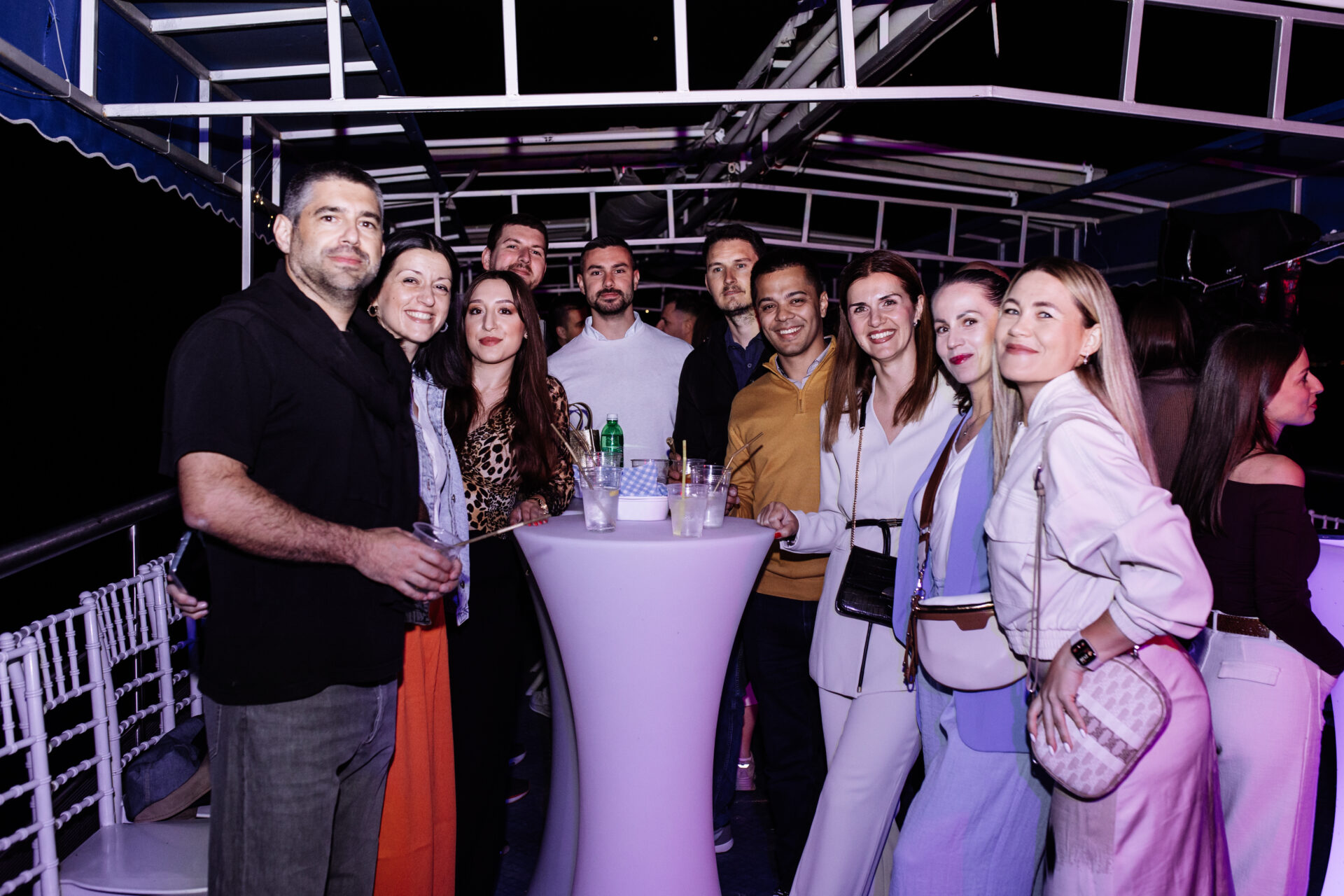
The setting was beautiful, but what made the weekend special was the people. Moments like these help us build stronger relationships, create a real sense of belonging, and reinforce the values that shape how we work together every day.
Because at the end of the day, our culture isn’t defined by policies or processes – it’s defined by the connections we build, the support we give one another, and the experiences we share.
And this weekend gave us plenty of all three.
We’re proud of the team we’re building and the culture we’re shaping together. If you’re curious about life at Damilah or interested in joining us on the journey, we’d love to hear from you.
To mark International Women’s Day this year, several leaders in our team shared what working in tech means to them, and what they can share with other women and girls aspiring to a career in tech.
How to achieve a 50/50 gender split
Across Europe, there are still far fewer women in technical roles. Most estimates say they make up only about 20-25% of the tech workforce. That means many engineering teams still miss out on a wide range of perspectives on a day-to-day basis.
Our gender balance at Damilah was not the result of quotas or hiring targets. Women join and stay at Damilah because they see other women in tech here, at all levels including senior leadership. They see women being given equal challenges as men so have a great opportunity to progress their careers. Naturally companies use networks to hire – when you hire women in the first place, women are more likely to recommend other women they know to join you. It’s a similar story when it comes to having more women making the hiring decisions and being involved in interviews.
How gender equality benefits Damilah
Having a diverse mix of voices at all levels shapes how we work. Different perspectives spark discussion and debate, making decisions stronger because they’ve been truly tested. In software development, where you’re dealing with complex systems, constant trade-offs and ever-changing client needs, those conversations make a real difference.
Colleagues also report our gender-balanced teams inspiring more collaboration, both in the office and with our clients. Sometimes the women in our teams make up the balance for our clients too, where their teams reflect more typical majority male gender split. Providing this gender diversity is especially helpful for companies where women make up a large proportion of their customers or service users. People (and AI) creating a product need to truly understand the customer, but men and gender-biased AI are more likely to misunderstand the needs of female customers and thus make inferior products.
If you would like advice on hiring more women in tech, or you could benefit from quickly gaining the support of more women in tech, contact us today!
A Look at What We Did
We started with an all-hands session—everyone in one room, sharing updates, talking openly about our progress, and aligning on priorities for the rest of the year.
The rest of the programme combined structured activities with time to connect. The group games sparked great energy and collaboration. Whether it was strategy-based challenges, quick decision-making, or problem-solving tasks, each activity helped bring people together in a different way.
Evenings? That’s when things really lit up.
We danced, we sang, we shared stories. The vibe was relaxed, the playlist was solid, and the energy carried long into the night.
Why It Mattered
We believe the best teams are built on trust, communication, and shared purpose. Taking time away from the screen to talk, reflect, and spend time together helps strengthen each of these core values.
This wasn’t just a break from work—it was a reminder of who we are as a team, and why our culture matters.
Check out the video for a look back at the highlights—from team sessions to challenges and late-night fun.
We’re heading into the second half of the year with stronger connections, a clearer focus, and a shared sense of momentum. Team building isn’t just a break from routine—it’s part of how we work at Damilah.
Together, we’re better.
This can also potentially allow your business to near-shore non-software development activities such as customer support, IT support and other admin functions where face-to-face contact with customers is not required regularly.
There are, however, risks associated with making this successful. So, having set up off-shore teams many times in my own career, I’d like to share some guidance on the main challenges you’re likely to face and the measures you can take to reduce those risks.
Choosing a location
This is the first thing you’ll need to think about – and there’s a lot to consider here. Most important are the level of technical skills in the market and the overall standard of English. For an initial understanding of these, it’s worth finding out what the technical universities teach in that region.
You should also have a good grasp of the local IT market – for example, is there a talent pool big enough for you to recruit from? And are there big, attractive tech firms in the region, such as Google or Meta, who’ll be competing with you for talent?
Within the country, there may be different cities with various pros and cons. For example, people are likely to demand higher salaries in capitals, but the supply will be better; whereas a smaller city might suit your needs if the costs are lower and supply is sufficient. There may also be more of certain types of skills in some cities than others due to other companies based there.
Consider local laws and regulations, such as how difficult it is to set up a business in that country, and the ease with which you can transfer capital. Take the local political situation into account, in terms of how stable the country is and whether it encourages IT companies to set up there with favourable tax regimes and other incentives. Additionally, there are perceptions that having an office in some countries may give to your investors and customers. For example, some nations may have more of a reputation for corruption than others.
Finally, you’ll need to consider the cultural differences between the UK and your potential location. Do people there tend to work in a way that is compatible with the culture you want to create? And is close collaboration between them and your UK employees likely to be successful?
Overall, when deciding on the right country, there’s no substitute for actually visiting the place – multiple times – to find the answers to these questions for yourself.
Understanding local cultural and working practices
Once you’ve decided on your location, build a good understanding of the differences between there and the UK, to ensure you don’t fall foul of any misunderstandings. For example, in North Macedonia, where Damilah’s developer hub is based, salaries are based around net income, rather than gross payments as we’re used to in the UK. So, if the government raises income taxes, you might find yourself having to increase salaries to maintain your employees’ level of income.
What’s more, in the emerging countries of Eastern Europe, there’s often strong competition for the best people, so it’s important to cover as many bases as possible to both attract and retain them. Other benefits, as well as salaries, need to be competitive compared with what other companies are doing in the local market.
Your HR practices should be good, too: in particular, ensuring all employees are given the training and support they need to help them reach their full potential. Training budgets are often the first to be cut back in mature western businesses. But for the enthusiastic, ambitious talent you want to hire, it’s crucial that you provide them with the tools to allow them to grow, or they will soon leave you to learn new skills elsewhere.
Overall, it’s vital to listen to your colleagues and be flexible if they make suggestions for activities, celebrations or training. For example, International Women’s Day is very important in North Macedonia and, with a 50-50 gender split at Damilah, colleagues expect the company to buy gifts for all the women on the day and have a celebratory lunch.
In short, employees need to know they have a voice that is heard, and that you care about them.
Finally, if you’re comparing countries, it’s important to understand what on-costs there are in each location. This will give you an accurate picture of cost-to-company (CTC) and allow you to make a fair evaluation.
Hiring a team
This will, of course, be the most critical part of the project – and potentially the hardest.
You may well find yourself up against a tricky battle for talent. As a new player in the local market, you’ll be faced with the question of why anyone should choose to work for you (unless you’re prepared to pay salaries that are over the odds). This can be exacerbated in places where people are more risk-averse when it comes to leaving their current employment, such as in former communist countries, where a culture of entrepreneurialism and risk-taking is less deeply embedded than the UK.
In such cases, it’s helpful to spend time building a brand for your company in the local market utilising social media. People are more likely to want to work for you if they know who you are and can see other people enjoying working for you.
You’ll also need to be sure that you’re hiring people who will fit into the kind of culture you want to create and not employees who are simply in it for personal gain. That’s why the most important first hire you could make is a head of HR – someone you can really trust, who knows the local people and culture, and can make sound judgements when it comes to recruiting the right team. A person like this can help to remove a large element of risk from the project, but they can also be hard to identify and attract to your business.
7 near-shoring ‘gotchas’
Here are some of the most common traps that, in my experience, organisations fall into when attempting to set up a near-shore team:
1. Mistakenly hiring people who are only in it for themselves and their friends
This often occurs when there’s a lack of understanding of the local culture and customs.
2. Failing to establish the right culture from the start
You might want a culture of transparency, honesty and close collaboration. The team you hire might have other ideas – and it may be hard to control that remotely.
3. Overpaying your people
If you don’t have an existing brand presence in the country, talent may not choose to work for you unless you’re prepared to pay over the odds – thus negating one of the key benefits of near-shoring.
4. Failing to comply with local laws and regulations
Without a deep local understanding, it’s easy to fall foul of, for example, different tax and accountancy practices. Things can get messy very quickly.
5. Your team quitting en masse before you’re big enough to cope with the loss
This could happen, for example, if a big player like Google comes to town with a more attractive offering for talent than you are able to give.
6. Failing to keep head office under control
For example, your HQ may want to enforce working practices, hiring practices or pay rises that are not appropriate for the location in which you’re operating.
7. Not listening to your employees
Employees in a near-shore location are as important as any others employed in your business. You need to listen to them and have the flexibility to adapt to local cultural needs and expectations.
Choose the right model
Rather than going it alone and taking on the large risks highlighted above, there is another way. Closely partnering with a company like Damilah, which has in-depth local knowledge, plus a proven team with the right levels of experience, can allow you to maximise the benefits of near-shoring, while minimising your risk.
This is a model that we at Damilah like to call ‘partner-shoring’. To find out more about reaping the benefits of near-shoring without suffering the pain, get in touch today.
Iain Bishop, founder and CEO, Damilah
A Smooth start with IT orientation
Your first day at Damilah begins with an IT Orientation session, where you’ll be introduced to the tools and programs that we use every day. Whether you’re a developer, a product owner, or part of the support team, you’ll receive the equipment you need to do your job effectively. We also provide home office equipment, ensuring that you’re set up for success whether you’re working in the office or from home.
As part of your welcome, you’ll receive a branded gift—our way of saying that we’re thrilled to have you on board. This small gesture is just the beginning of how we show our appreciation for our team members.
A personal welcome from our CEO
We believe that every new employee is a valuable addition to the organisation. That’s why our CEO takes the time to personally welcome each new hire. Whether it’s a face-to-face meeting or a virtual greeting, our CEO ensures every new team member feels recognised and appreciated. This warm introduction sets the tone for a culture that values each individual’s contribution.
Orientation session: Getting to know Damilah
Every organisation has its unique way of working, and our Orientation Session is designed to help new employees understand ours. This session introduces new team members to our business, leadership teams, and key company policies. It’s an essential step in helping everyone understand how we work, our goals, and how they fit into the bigger picture.
Discovering our culture and development programs
We take pride in fostering a culture that invests in professional growth. Our People Development Team guides new employees through the development process from the start. During onboarding, new hires learn about our extensive programs for growth, including:
- Internal Soft Skills Training: Opportunities to enhance communication, teamwork, and other essential skills.
- 1:1 Development Sessions: Personalised sessions to support individual growth and career development.
- Technical Training Programs: Access to conferences, courses, and certifications to stay on the cutting edge of technology.
New employees are also introduced to our core values, and they get a tour of our modern offices to see how our culture comes to life every day.
Team Integration: Building connections
A key part of your onboarding is meeting your team. Your Line Manager and colleagues will warmly welcome you and take the time to introduce themselves. We believe that team dynamics are crucial, so we organise a Team Lunch where you can get to know your teammates in a relaxed setting. This is a great opportunity to start building relationships and get a feel for the team culture.
Introduction to projects and tools
To ensure a smooth transition, the team provides an overview of the current state of ongoing projects, including the tools and technologies in use. This helps new employees quickly get up to speed and feel comfortable in their new environment. The team is always there to support and assist with any questions or challenges that arise.
Continuous Improvement: Your feedback matters
We’re always looking for ways to improve, and your feedback is a crucial part of that process. After your first month, you’ll receive a short survey to assess the quality of the onboarding process. This survey is designed to capture your impressions and suggestions, helping us refine and adapt our onboarding to better meet the needs of future employees.
Setting goals for growth
The onboarding process doesn’t end after your first month. At the end of your 90-day probation period, we take the time to set a Baseline in the Skill Matrix. This assessment helps us understand your current skill level and sets the stage for your future development. Together with your Line Manager, you’ll establish goals for the coming period, ensuring that your professional growth is aligned with your aspirations and the needs of the company.
Welcome to Damilah: Your journey begins here
Our onboarding process is more than just a series of steps—it’s the beginning of your journey with us. We’re committed to making sure you feel supported, valued, and excited about the road ahead. Whether you’re joining us in the office or remotely, we’re here to ensure that your transition into your new role is as smooth and rewarding as possible. Welcome to the team—your journey at Damilah starts now!
Crossing the finish line at the Wizz Air Skopje Marathon
Crossing the finish line is an incredible feeling, filling everyone with pride and a sense of achievement. Every step during the race is a testament to pushing limits and striving for our best.
Participating in the marathon is more than individual accomplishments; it’s about coming together as a team. There’s constant support, encouragement, and celebration of every small victory along the way. We challenge ourselves, set new goals, and find joy in running side by side.
The excitement of running together keeps us motivated to stay active, healthy, and connected. We’re already looking forward to more running events and challenges in the future!
Celebrating women’s strength at the Avicena Women’s Race
The team also proudly joins the Avicena Women’s Race each year, an inspiring event that celebrates the strength, resilience, and spirit of women in sports. The atmosphere is always buzzing with energy as women of all ages come together to run and support each other.
It’s inspiring to see so many strong, determined women on the track, each running for her own reasons. This race is about more than just running; it’s about supporting women, building confidence, and enjoying the camaraderie of a healthy and positive activity.
We cheer on all the incredible women who run with passion and purpose. Their spirit reminds us how important it is to support each other, set goals, and have fun along the way.
Committed to staying active and healthy
Taking part in events like the Wizz Air Skopje Marathon and the Avicena Women’s Race is not just about running; it’s about fostering a healthier lifestyle. By encouraging running and fitness, we aim to inspire everyone to stay active and make positive choices.
These events reflect our commitment to promoting well-being, teamwork, and a positive mindset. They remind us that every step brings us closer to our goals—both on the track and in life.
Let’s keep running, smiling, and chasing our dreams together. Stay tuned for more adventures and challenges as we continue to enjoy running and staying fit as a team!
Sport gives us some of the clearest examples of this challenge. Assemble a team of individually brilliant players, in any sport, and you will not automatically get a brilliant team. History is full of squads with world-class talent that underperformed, and leaner, less decorated teams that consistently punched above their weight. The difference is rarely ability. It is how well the team is managed, motivated and united behind a shared goal.
The same is true in software development. You can’t produce great software without great people. But you also need to ensure you create the right conditions for those people to succeed.
We therefore believe it’s always worth the time, effort and expenditure of investing in all our people. By showing we care, and helping them to reach their potential, they will always go the extra mile and produce better quality work for our customers. So here are some of the ways we enable this at Damilah:
Maintaining a positive culture
We strive to create a culture that is open and supportive, where everyone is clear on what success looks like and how they can find the right path towards it.
Our line managers are ultimately responsible for an employee’s growth and development, but it’s not limited to them. For example, someone might need support for a particular skill that is not within the line manager’s competence – in which case, we’ll ensure they are connected to the right person in the business to help them develop in the desired way.
In other words, we’re constantly supporting each other and growing together.
What’s more, it’s important to us that our people are prepared to take risks in order to develop and innovate. If they are afraid to, they will usually struggle to advance. Of course, that those risks will be taken in a measured way with the right support.
Software and technology are always changing and we constantly need to try new things to stay ahead of the game. We’ll usually do that in close consultation with clients, and often ‘spike’ technology – that is, test something in a controlled environment. If it works, then great: we can roll it out. And if it doesn’t, we’ll learn from it and move on. We learn lessons together with our clients in an environment built on mutual trust.
Investing in training and development
I’ve worked in businesses as a CTO where training is the first thing to go when budgets are tight. But that’s a false economy that ultimately impacts on the quality of the work delivered and the success of the business. That’s why we continue to invest in training, because we know we’ll get a return on it, tenfold or more.
Each of our employees has a development plan, which can include both technical skills and the ‘softer’ skills, such as communication or presentation. Doing this, we believe, delivers the obvious short-term benefit of upskilling our team – but also the long-term benefit of an increasingly knowledgeable, committed workforce that chooses to stay with us.
Celebrating innovation and success
With technology changing as fast as it does, it is important for us to stay close to new developments and make space for our people to explore them. We do this by providing opportunities to all our people to initiate or join specific innovation projects, which allow them to invest time in trying out new technologies that enhance our capabilities and ensure their skills remain at the forefront of the industry.
There is no greater motivator than success – and it can be addictive. We celebrate success at every opportunity, for example by having annual awards for both individuals and teams. Awards are based on performance and also the way in which our people uphold and emphasise the values of our business.
Working as one team with our customers
We believe strongly in the value of teamwork, and our commitment to this extends to our customers. We avoid the traditional customer-supplier relationship, opting for collaborative, transparent partnerships from the outset.
We encourage customers to feel as if we’re all part of the same organisation, working towards the same goals. Quite simply, that’s our culture – and the culture we encourage from everyone we work with, both internally and externally.
If you’d like to find out more about any of the points raised in this article, and how we can deliver great software for your business, get in touch now.
Iain Bishop, founder and CEO, Damilah
Our Principal Product Owners, Iskra Ristovska and Olgica Strezoska, took the stage as speakers, captivating the audience with their insights on “How to build better products by improving your product discovery.”
With utmost confidence and passion, they delved into effective tools and practices that empower individuals to enhance their product discovery process. Their presentation not only emphasized the significance of product discovery but also showcased practical ways to improve it, ensuring the development of products that cater to the needs and aspirations of customers.

Iskra and Olgica’s engaging presentation sets a remarkable example for aspiring women in the tech industry, igniting inspiration and encouraging them to fearlessly pursue their passions, embrace professional growth opportunities, and make their mark in the field.
At Damilah, we are fully committed to fostering an inclusive work environment that ensures equal opportunities for all. Through initiatives such as our Graduate Program, targeted skill development programs, and platforms that showcase the expertise of women, we empower women to excel in their careers and emerge as leaders in the industry.

By creating opportunities, providing steadfast support for growth, and amplifying the voices of women, Damilah paves the way for a future in the tech sector that is both inclusive and innovation driven.