
Our recent trivia night brought together colleagues from across the company for an evening of questions, debate and the occasional (very confident) wrong answer. Testing our knowledge of geography, football, science and pop culture was a great excuse to spend time together outside our usual routines, and the burgers and drinks helped too.
Whether people came ready to win or simply to have fun with their teammates, the evening was full of laughter, quick thinking and the spirit of friendly competition.
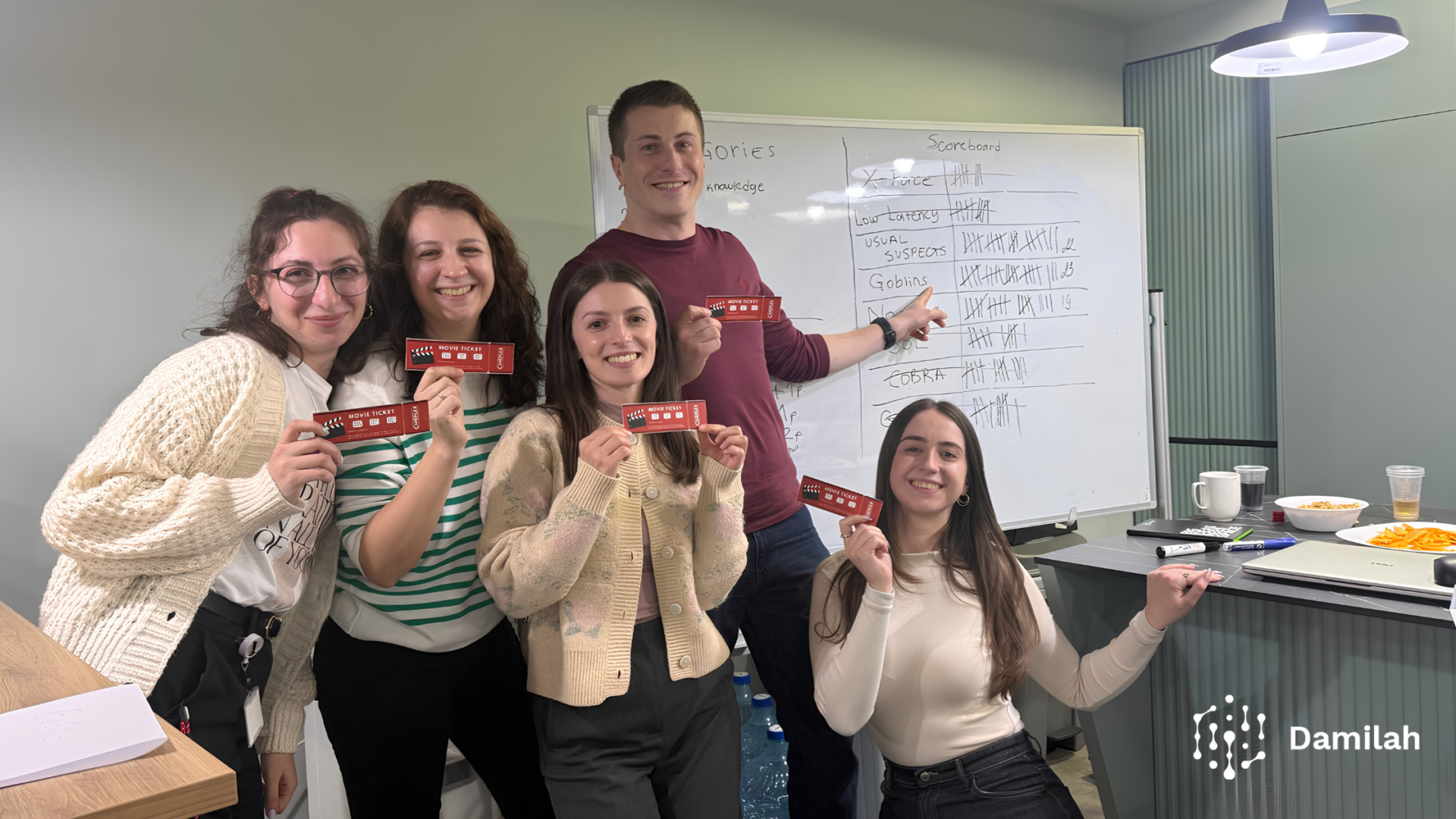
Then came the World Cup, which gave us another reason to get competitive. We set up a predictions board and a sweepstake so everyone could make their picks and follow the tournament with a little extra interest. The leaderboard became a running source of entertainment throughout the five weeks of competition.
A special congratulations to Aleksandar Karavasilev, who took first place in the sweepstake with Spain, and to Renata Todevska, our top Predictions Board player. It turned out that football knowledge is holding up nicely at Damilah!
What makes moments like these worth it
What we enjoy most about activities like these is the mix of people they bring together.
Colleagues who sit in different teams, work on different projects and may not cross paths much day-to-day end up sharing a table, debating answers and cheering on their sweepstake picks side by side.
These moments create the kind of familiarity that makes our team work well together. Getting to know one another outside of work helps us communicate more openly, support each other, and ask each other for help when we need it.
A good workplace is not only about getting the work done. It is also about enjoying the people you work with and celebrating these shared wins.
If you are curious about life at Damilah or thinking about joining us, check out our open positions here.
Our recent team building weekend in Ohrid was a great reminder of that.
The weekend began with a treasure hunt through the city. Teams worked together to solve clues, navigate Ohrid’s streets and enjoy a bit of friendly competition along the way. It was fun, but more importantly, it strengthened the trust, collaboration and teamwork that sit at the heart of our culture.
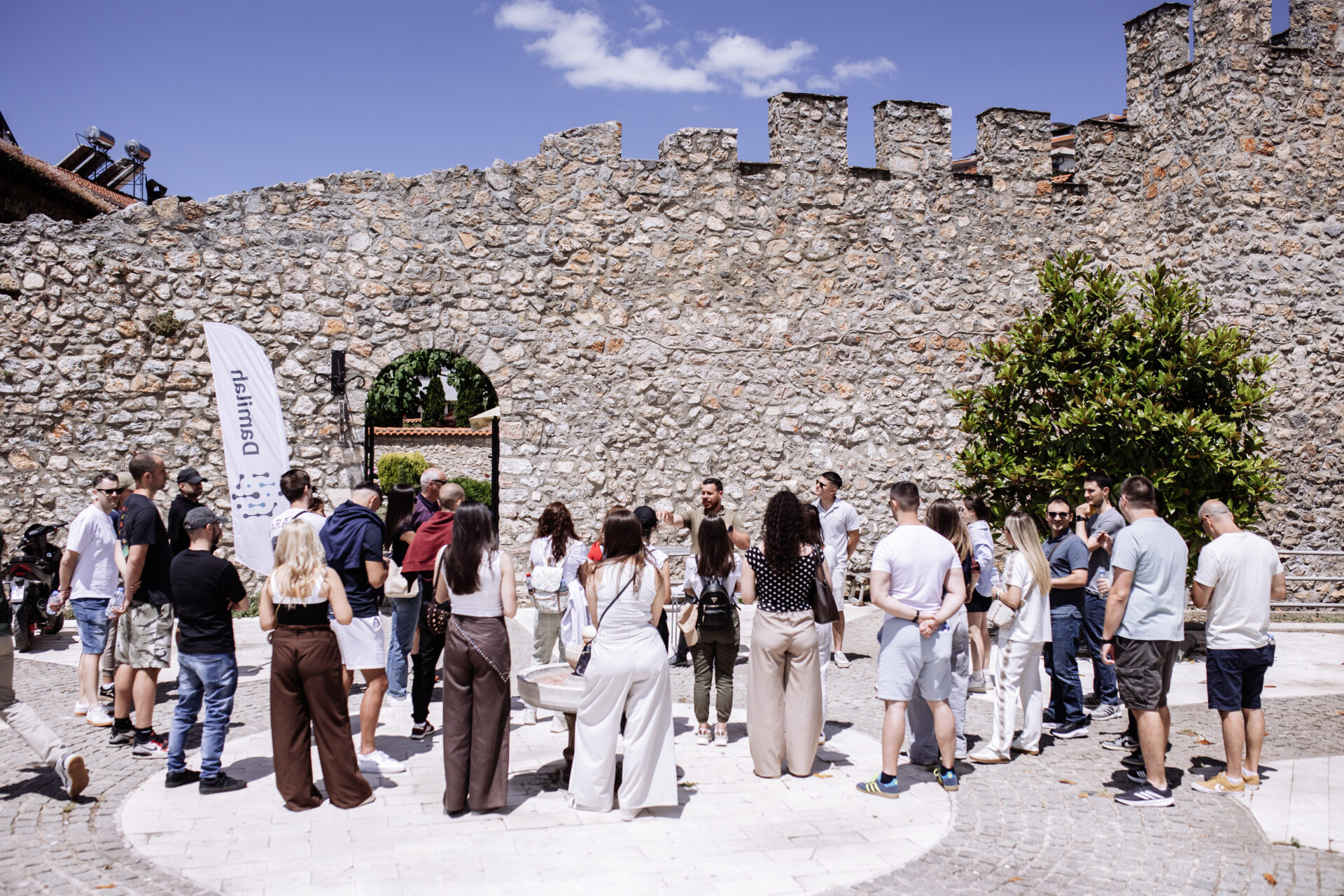

Later, we had lunch by the lake, taking time to talk, share stories and enjoy each other’s company outside our usual day-to-day work.
The weekend also gave us the chance to celebrate our people and reflect on everything we’ve achieved together over the past year. Hearing colleagues share project successes, milestones and lessons learned was a powerful reminder that behind every result is a group of talented individuals whose commitment keeps Damilah moving forward. Taking the time to recognise those contributions made the experience even more meaningful.
Celebrating who we are, not just what we deliver
One of the highlights of the weekend was our evening karaoke party on a boat. Between the music, laughter and unforgettable performances, it captured something we value deeply at Damilah: creating an environment where people feel comfortable being themselves.
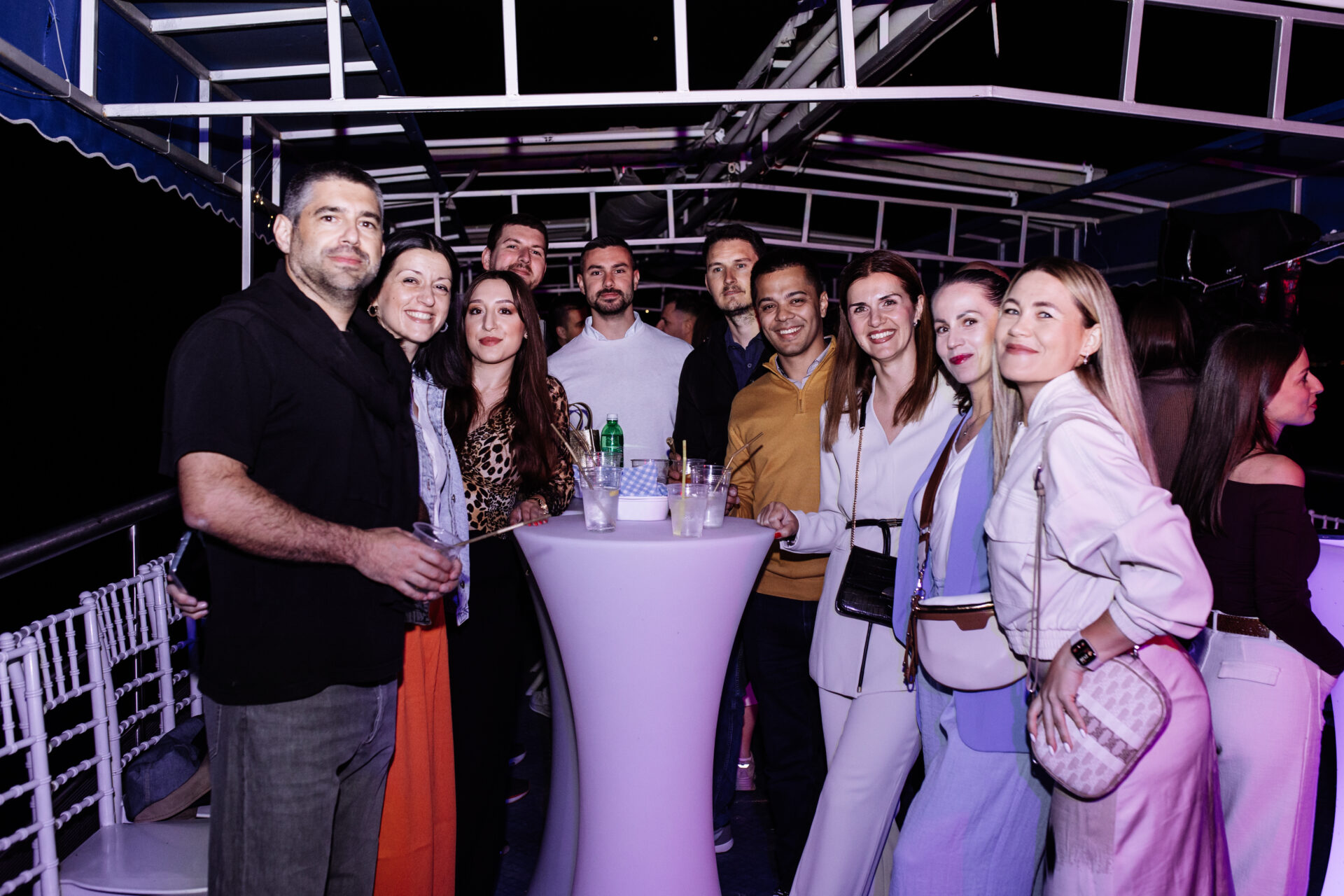
The setting was beautiful, but what made the weekend special was the people. Moments like these help us build stronger relationships, create a real sense of belonging, and reinforce the values that shape how we work together every day.
Because at the end of the day, our culture isn’t defined by policies or processes – it’s defined by the connections we build, the support we give one another, and the experiences we share.
And this weekend gave us plenty of all three.
We’re proud of the team we’re building and the culture we’re shaping together. If you’re curious about life at Damilah or interested in joining us on the journey, we’d love to hear from you.
To mark International Women’s Day this year, several leaders in our team shared what working in tech means to them, and what they can share with other women and girls aspiring to a career in tech.
How to achieve a 50/50 gender split
Across Europe, there are still far fewer women in technical roles. Most estimates say they make up only about 20-25% of the tech workforce. That means many engineering teams still miss out on a wide range of perspectives on a day-to-day basis.
Our gender balance at Damilah was not the result of quotas or hiring targets. Women join and stay at Damilah because they see other women in tech here, at all levels including senior leadership. They see women being given equal challenges as men so have a great opportunity to progress their careers. Naturally companies use networks to hire – when you hire women in the first place, women are more likely to recommend other women they know to join you. It’s a similar story when it comes to having more women making the hiring decisions and being involved in interviews.
How gender equality benefits Damilah
Having a diverse mix of voices at all levels shapes how we work. Different perspectives spark discussion and debate, making decisions stronger because they’ve been truly tested. In software development, where you’re dealing with complex systems, constant trade-offs and ever-changing client needs, those conversations make a real difference.
Colleagues also report our gender-balanced teams inspiring more collaboration, both in the office and with our clients. Sometimes the women in our teams make up the balance for our clients too, where their teams reflect more typical majority male gender split. Providing this gender diversity is especially helpful for companies where women make up a large proportion of their customers or service users. People (and AI) creating a product need to truly understand the customer, but men and gender-biased AI are more likely to misunderstand the needs of female customers and thus make inferior products.
If you would like advice on hiring more women in tech, or you could benefit from quickly gaining the support of more women in tech, contact us today!
Background and challenges: The need to accelerate development
Zellis is the UK and Ireland’s leading provider of AI-enabled HR, workforce management, and payroll software and services, working with many large top-tier organisations.
The company’s flagship HCM suite is used by millions of employees every month to view interactive digital payslips, book annual leave, submit expenses, and more. Zellis’s clear ambition is to power exceptional employee experiences through a consumer-grade and engaging user experience.
To support and strengthen product development as part of a major investment programme, Zellis decided to engage Damilah as a near-shore partner.
The key selection criteria were set out as follows:
- A partner that could resource quickly, with talented employees, when additional scale was required
- A company that believed in investing in its own people in order to attract, develop and retain top talent
- An industry leader when it came to delivery, with a strong background in developing quality software at pace using agile methods
- A near-shore firm that was easily reachable from the UK, without the need for long flights across multiple time zones, and where cultural alignment would be straightforward
After a structured RFP process, Zellis were impressed by our capabilities and our ‘partner-shoring’ approach – where a client and near-shore partner work seamlessly together towards common goals – so selected us as one of their development partners, beginning in early 2024.
The solution: Our proactive approach with a strong focus on delivery
Zellis were looking for a new and unique way of presenting a more visualised version of employees’ salary information, using a very specific design structure. This was complex work – but rather than tackle some of the easier elements of the project first, we decided to lean into this task straight away.
And, by the end of our first two-week sprint, we were able to deliver a working demo.

“I was immediately very pleased with this, as a lot of developers would want to tackle the easier parts first to show rapid progress, especially at the start of the relationship,” says Bob Hoskins, Director of Product Management – HR & WFM.
“So, we’ve benefited from a real mix of work from Damilah,” Bob adds. “The high-profile parts that make it into the corporate videos; and also, in the background, the real nuts and bolts of delivering the product.”
Throughout, the Zellis team have been particularly impressed by our:
- Proactive approach: We have demonstrated a can-do attitude to everything we undertake and a relentless focus on delivery using agile methodologies. “They’re able to deal with ambiguity very well – so they can take hold of problems, figure them out and get to a solution more or less autonomously,” says Phil Brown, Director of Engineering.
- Outstanding people: From day one, we’ve employed talented people to work on the project. In particular, we went to great lengths to hire someone who is a specialist in the relevant business domain.
- Strong relationships: Everyone from Zellis and Damilah feels as if they’re working on the same team, pushing towards the same goals. To set the foundation for this, we invited key members of Zellis’s team to our HQ in Skopje, North Macedonia, to ensure there was face-to-face contact early on in the project – which we believe is always valuable to ensure cohesion.
- Clear communication: We are always transparent with our partners and share any issues or blockers as soon as they occur, in order to find solutions as rapidly as possible.
- Added value: Our willingness to support beyond the specific project deliverables, sharing expertise in a range of areas in which we have specific experience.
The outcomes: Enhanced productivity, enthusiasm and added value
The project is now close to launch – and Zellis have been delighted with what we have helped them to achieve.
In particular, the following outcomes have stood out for them:
- Meeting critical deadlines: We have hit crucial phase gates on time.
- Enhanced productivity levels: We have delivered more and faster outputs than they had previously experienced with other partners.
- Passion and enthusiasm: Our positive, can-do energy has been appreciated by Zellis’s own team, who have described us as a “breath of fresh air”.
- Leveraging AI: We have helped to develop AI-driven functionality that explains to employees why their pay has changed – which will potentially save the HR teams served by Zellis many hours of handling employees’ queries.
In all, Zellis fully expect features like this, and the overall redeveloped product, to drive added value for their customers.
As for the future, we are exploring further ways to help Zellis achieve further growth, especially in areas where they may need to flex rapidly.
“In particular, Damilah are ideally suited where we have a critical deliverable with challenging timelines, and a high degree of technical uncertainty and ambiguity. We describe them as being like our ‘special forces’, whom we can rapidly deploy to solve the toughest problems.” says Phil.
In summary, Phil has the following to say about us:
“They’re great to work with, and they really value their people. Generally speaking, in software engineering, a small number of very bright people will outperform large teams of mediocre people. Damilah truly demonstrate that – it’s their philosophy.”
Bob adds:
“I’ve been impressed by their honesty throughout. They’re not afraid to challenge our thought processes or to push back, and they don’t sit on problems until they explode. It feels like they’re a natural extension of our own team, which is exactly what you want from a partner.”
“Software engineering has always been a story of more abstraction: from assembler, to higher-level languages, to cloud, and now to prompting and orchestration. This is just the next layer.”
Interview to prototype in six hours, down from three months
At the third of Damilah’s CTO Breakfast sessions, Aleksandar Karavasilev, CTO at Damilah described a project that demonstrated what using AI end-to-end could achieve in software engineering.
The project: Helping the University of Economics in Skopje improve exam scheduling. This would normally would take a full team 2–3 months.
Damilah’s approach was to use AI in every step:
- Scope: The team interviewed university staff, recorded the sessions, transcribed it, and immediately ran them through ChatGPT and Perplexity to summarise and define scope in one go.
- Architecture: Using Napkin AI, they generated a solution architecture in about 30 minutes.
- Code: A single developer and an architect used prompting tools to generate the working code.
- Testing: About an hour to validate and check requirements.
Total time: Around six hours from interview to functional prototype.
The university is adopting this tool for real use, with just a bit more refinement.
“Instead of 2–3 months with a full team, we did 90% of it in six hours with a tiny team. You can’t do that everywhere, but in the right context it’s game-changing.”
Shifts in engineering roles and skills with AI
This prompted a discussion around how AI changes what engineers actually do. Several participants described the rise of what they called the Product Engineer, people who solve business problems end-to-end. Tech should just be the means to an end.
There was broad agreement that AI is creating demand for new kinds of roles:
- Prompt Engineers: People who know how to craft effective, context-aware instructions for AI tools.
- Model Integrators: People who understand different models and can chain them together to solve real business problems.
- AI Governance Leads: Defining what’s allowed, securing approvals, and managing risk.
Teams will become smaller, with tighter domains. The ratio between product managers to engineers will be closer, and there will be more diverse skills on teams, balancing deep tech expertise with communication, design, security, and understanding customers.
AI is changing relationships between teams. Product managers and designers now have access to tools that let them build rich prototypes in hours. That’s great for speeding up feedback loops, but it also risks creating silos.
“We spent years getting product, design, and engineering to work together in discovery. Now they’re off doing their own thing again.”
Participants talked about the need for:
- Clear, shared OKRs to keep teams aligned.
- Involving engineering early in discovery, even if AI is making everything faster.
- Creating review processes that make sure those prototypes, if they’re not going to be thrown away, are secure, performant, and maintainable.
“AI won’t fix your process. If you have a crap process, it’ll just make the chaos go faster.”
How to manage expectations of AI
Several attendees discussed managing internal expectations, as well as those of their investors. Practical advice included:
- Channel enthusiasm into small, targeted pilots that deliver real wins.
- Educate business stakeholders on what AI can and can’t do.
- Avoid “solutions looking for a problem.”
One private equity partner noted:“We see a growing gap between AI-native startups that are lean and fast, and legacy companies buried in compliance and old systems. This is just cloud and Agile all over again, but on steroids.”
AI presents a generational opportunity to redefine software engineering productivity, team dynamics, and product development. However, its successful adoption depends on careful governance, cultural alignment, and sustained investment in human expertise.
Engineering teams will not disappear but will evolve to become more impactful, cross-functional, and focused on high-value problem-solving. The organisations that succeed will be those that balance technological acceleration with human-centred development, ethical oversight, and continuous learning.
“Technology is the easy bit. It’s people and process that make or break you.”
Explore more: Find related articles on our Blog
-

The new product owner: from backlog managers to product engineers
In traditional IT outsourcing, the product owner role tends to shrink to one task: backlog management. Requirements come in, user stories go out. That model is starting to show its limits. There is growing recognition that product owners in outsourced teams need more than backlog management skills and that the role itself needs to evolve.
-
Beyond the backlog: the product culture gap in near-shore software development
When tech ecosystems are shaped by outsourcing and staff augmentation, software development teams risk becoming expert executors. But, especially in the age of AI, what they need is a strong product culture: a mindset that focuses on user outcomes, not just shipped features.
-
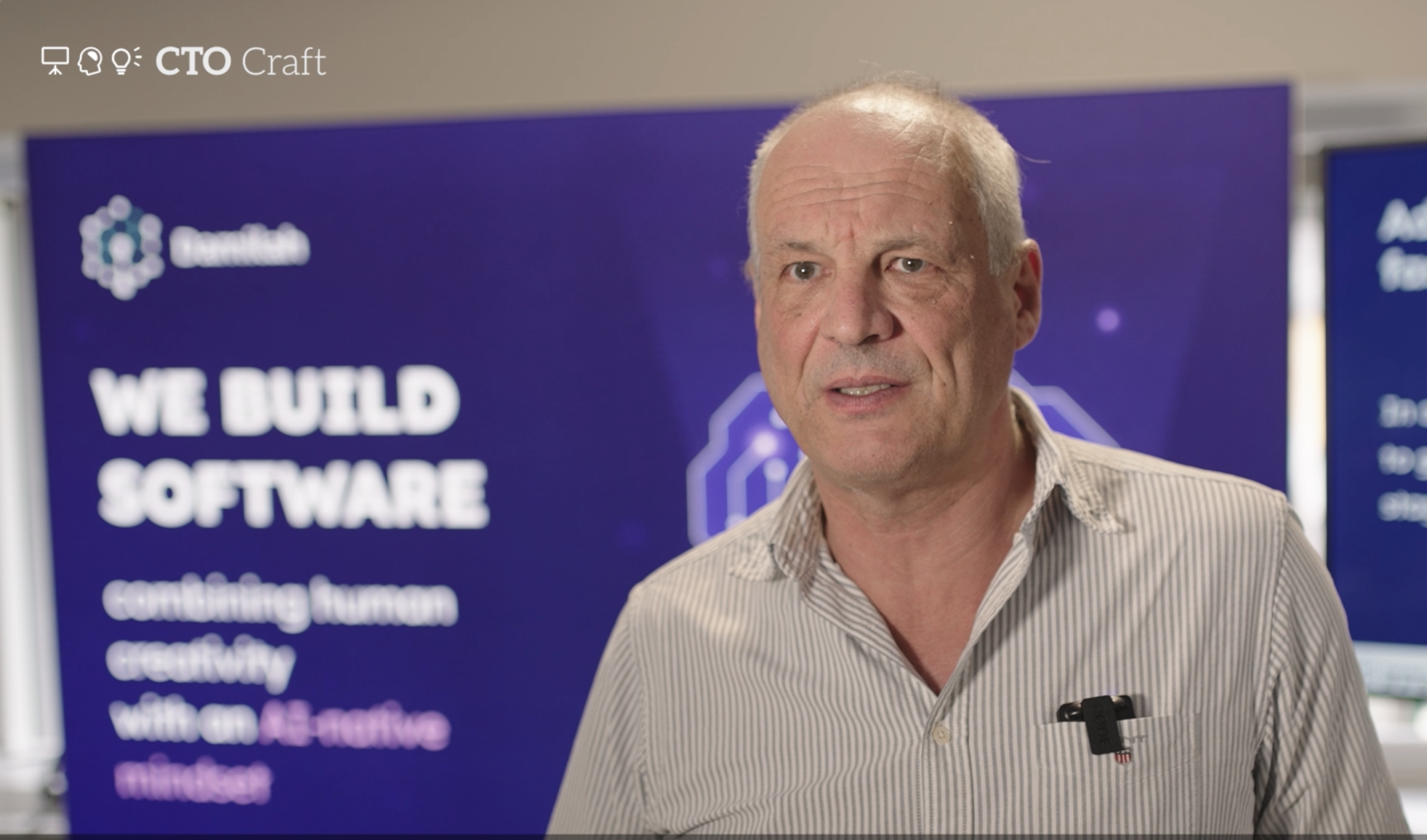
Engineering 2028: The AI maturity journey | Iain Bishop at CTO Craft Con 2026
AI maturity starts with rethinking how software is built, how teams are structured, and what the “senior” title really means in an AI era. Organisations that move beyond experimentation are willing to question their operating model, not just layer AI onto the way they’ve always worked.

Subscribe to our newsletter
Sign up for our newsletter to get regular updates and insights into our solutions and technologies
eBook
Delivering Great Software on Time
A Look at What We Did
We started with an all-hands session—everyone in one room, sharing updates, talking openly about our progress, and aligning on priorities for the rest of the year.
The rest of the programme combined structured activities with time to connect. The group games sparked great energy and collaboration. Whether it was strategy-based challenges, quick decision-making, or problem-solving tasks, each activity helped bring people together in a different way.
Evenings? That’s when things really lit up.
We danced, we sang, we shared stories. The vibe was relaxed, the playlist was solid, and the energy carried long into the night.
Why It Mattered
We believe the best teams are built on trust, communication, and shared purpose. Taking time away from the screen to talk, reflect, and spend time together helps strengthen each of these core values.
This wasn’t just a break from work—it was a reminder of who we are as a team, and why our culture matters.
Check out the video for a look back at the highlights—from team sessions to challenges and late-night fun.
We’re heading into the second half of the year with stronger connections, a clearer focus, and a shared sense of momentum. Team building isn’t just a break from routine—it’s part of how we work at Damilah.
Together, we’re better.
At the second of our CTO Breakfast Briefings, where technology executives gathered to examine the growing influence of AI on the software development lifecycle, Aleksandar Karavasilev, CTO at Damilah, shared the results of Damilah’s AI experiments. These revealed practical gains and sparked further discussion around how AI is reshaping team workflows, engineering oversight, and productivity.
500 hours’ time saved in three months with AI
Aleksandar opened the session by presenting findings from structured experiments using tools like GitHub Copilot and Cursor. One example showed how engineers used Cursor to analyse over 900 SQL procedures, reducing what would typically take weeks into a few days. Across 80 engineers, the company recorded over 400 – 500 hours saved in just three months.
While the productivity gains were clear, attendees agreed that traditional metrics, such as story points or cycle time, struggle to reflect the real impact of AI assistance. Some have started running side-by-side comparisons using past sprint data. Others rely on direct feedback from engineers to assess where AI adds the most value.
Human accountability and measurement challenges
Participants discussed optimal approaches to handling bugs in AI-generated code. They generally agreed that no AI tool is capable of producing perfect code.
In particular, “code bloat” was highlighted as a major issue. In other words, as AI operates so rapidly, it’s easy to generate huge amounts of code – and inevitably the more code that exists, the more bugs there will be.
Because of this, there was a consensus that:
- It’s essential to ensure human involvement at every step of the development process.
- “People must remain accountable for what they produce,” said one attendee.
- Code reviews, both by humans and tools such as CodeRabbit, are particularly important.
Privacy, security and regulatory requirements shape implementation
Security and compliance featured heavily in the conversation. Organisations are under pressure to ensure that AI tools don’t expose sensitive information or create audit gaps. A few attendees discussed:
- Creating data wrappers to monitor agent activity
- Preventing tools from leaking PII
- Building traceable workflows that can meet third-party audit standards
These measures allow AI to be used in sensitive industries like finance and healthcare.
Managing AI Costs and Infrastructure choices
As AI becomes more integrated into workflows, its operational cost has come under scrutiny. Attendees noted the rising expenses of using large language models through public APIs and the unpredictability of long-term pricing.
Alternatives currently under consideration include:
- Hosting lightweight private LLMs
- Running AI models locally on edge devices
- Replacing SaaS-based solutions with internal AI-driven systems built using MCP
These strategies aim to make AI adoption more sustainable while maintaining data privacy and performance.
AI is redefining engineering workflows
Attendees agreed that AI is influencing how engineers work. By offloading repetitive or time-intensive tasks, AI enables developers to focus on problem-solving and innovation.
However, participants raised concerns about the learning curve for junior engineers. If AI handles too much, new developers risk missing foundational knowledge. Several organisations now combine AI tooling with mentorship programmes and hands-on training. One attendee noted that AI should be treated as a peer contributor: fast, efficient, but imperfect, always requiring human oversight.
Rethinking SaaS business models in the age of AI
Attendees discussed how AI, particularly LLMs and generative tools, is forcing product and commercial leaders to reconsider SaaS business models. One speaker described the tension between using AI to accelerate a content-driven business while also facing existential risk from the same technology. As AI agents shift how people search, consume, and generate content, traditional SEO-led monetisation strategies may become less effective. Another participant noted that the ease of creating AI-powered workflows has made it harder to differentiate products, urging businesses to focus on their unique value propositions. Several attendees agreed that pricing models would need to evolve, moving away from flat-fee SaaS toward usage-based or outcome-driven approaches.
Final Thoughts: Success requires structure, not just tools
AI tools have moved from experimentation to execution. They’re helping engineering leaders solve long-standing problems, accelerate timelines, and explore new ways of working. But the session also made it clear that success depends on structure: on clear governance, trusted oversight, and shared learning.
Explore more: Find related articles on our Blog
-
The new product owner: from backlog managers to product engineers
In traditional IT outsourcing, the product owner role tends to shrink to one task: backlog management. Requirements come in, user stories go out. That model is starting to show its limits. There is growing recognition that product owners in outsourced teams need more than backlog management skills and that the role itself needs to evolve.
-
Beyond the backlog: the product culture gap in near-shore software development
When tech ecosystems are shaped by outsourcing and staff augmentation, software development teams risk becoming expert executors. But, especially in the age of AI, what they need is a strong product culture: a mindset that focuses on user outcomes, not just shipped features.
-
Engineering 2028: The AI maturity journey | Iain Bishop at CTO Craft Con 2026
AI maturity starts with rethinking how software is built, how teams are structured, and what the “senior” title really means in an AI era. Organisations that move beyond experimentation are willing to question their operating model, not just layer AI onto the way they’ve always worked.
Subscribe to our newsletter
Sign up for our newsletter to get regular updates and insights into our solutions and technologies
eBook
Delivering Great Software on Time
And this sums up, in a nutshell, our philosophy when it comes to gender balance and inclusion.
Diversity isn’t our goal; it’s how we work as a business. This is not only because we believe it’s the right thing to do, but also because we know it achieves better results for us and for our clients. We therefore see it as an intrinsic part of our culture, and one of our key strengths.
Consequently, we’re extremely proud of the fact that nearly 50% of our workforce are women, with many in senior leadership roles.
Elena has seen this first-hand at Damilah.
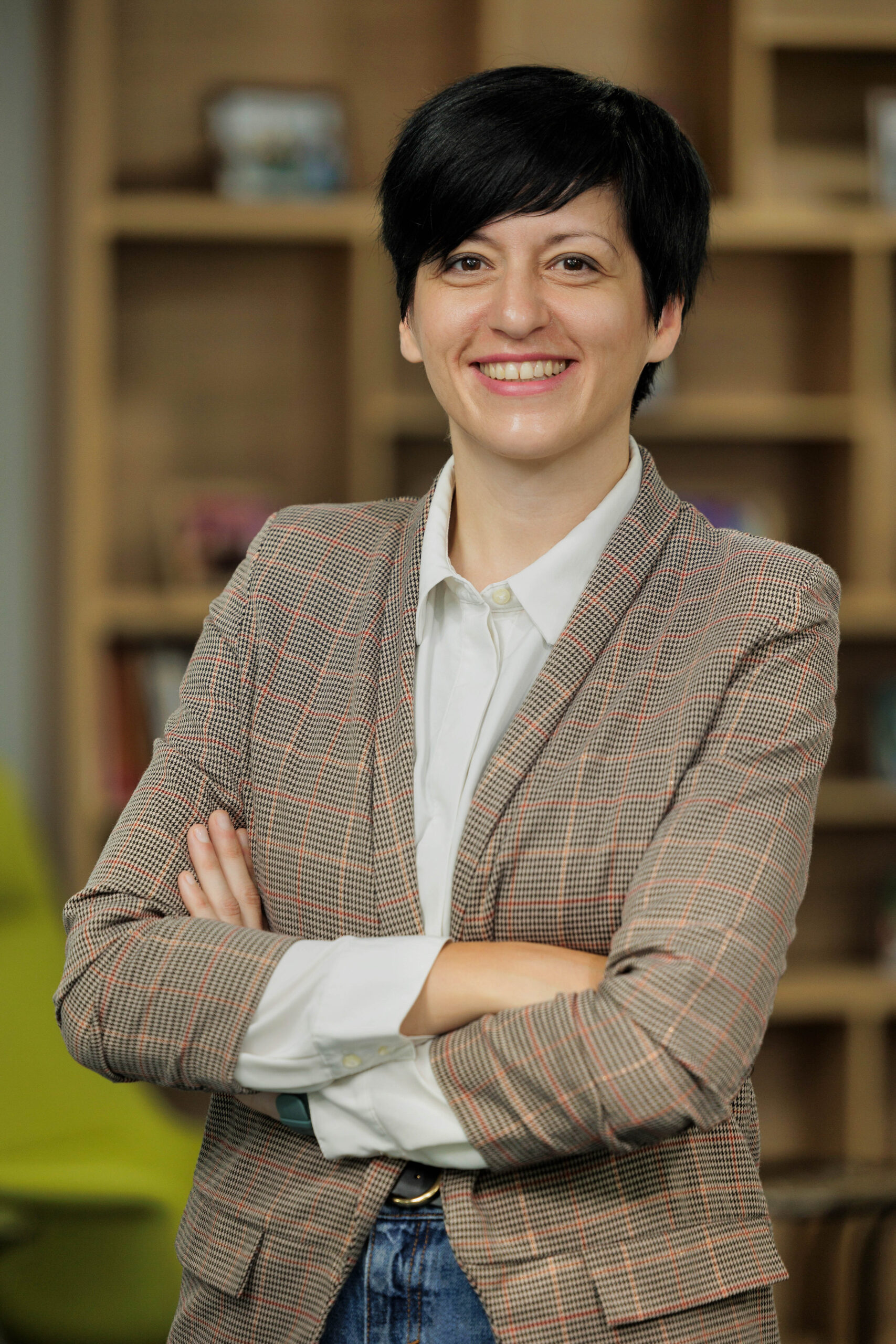
“When I first joined the company nearly three years ago, I was the only woman on my team. Now we are seven men and five women, and I was promoted after less than a year, which shows that the company doesn’t just talk about inclusion – it really means it.”
Elena Madjirova Miladinoska, Principal Software Engineer and Technical Lead
Her colleague, Fikrije Stafai, a Senior Delivery Manager who has been with Damilah for a similar amount of time and now line manages the other DMs, strongly agrees. She also believes that balanced teams tend to result in a higher level of efficiency and productivity. “Everything is more organised when women are included!” she says.
Galina Dushanski, a Software Engineer who joined Damilah as a graduate in 2022, adds: “Gender diversity creates a more open and respectful environment, and a team dynamic where we all listen to each other, even if we don’t agree at first. That leads to better outcomes in the long run.”
Our inclusive culture
Such deep respect for colleagues, regardless of gender or background, stems largely from our company culture, where inclusivity is deeply embedded.
“It’s not someone’s gender that matters,” says Sandra Velichkovska, a Senior Talent Acquisition Specialist, who joined Damilah more than three years ago and has been promoted twice in that time. “It’s about the culture we bring with us.”

This leads to a feeling of empowerment for every employee, says Galina. “We are creating a place where everyone feels comfortable to speak and grow. In my team, every voice is genuinely heard. From day one, I was treated with respect, and my opinions were valued, just like anyone else’s.”
The women at Damilah also appreciate the many benefits that the business offers its employees, allowing them to progress their careers and fulfil their potential. There are training days and workshops – which are, of course, helpful for all colleagues – but also family-friendly policies, such as generous parental leave, the freedom to work from home at any time, the option to take unexpected days off (for example, to look after a sick child), and even birthday presents for employees’ children. “My kid loves those!” says Elena.
Valuable business impacts
Damilah’s women strongly believe that our inclusive culture makes a genuinely positive impact on the work we do as a business.
Elena points to the greater degree of collaboration that tends to happen when women are present. “We’re currently working on a big project with multiple teams,” she says. “I’ve been able to make a big impact by facilitating cross-team communication and collaboration, ensuring we have alignment, arranging the meetings, following up on people’s actions. I’m not sure this would happen without a woman’s input!”
Meanwhile, Fikrije constantly sees evidence that the gender balance creates high degrees of accountability and a strong focus on detail – as well as the ability of certain female colleagues to give team members a lift.
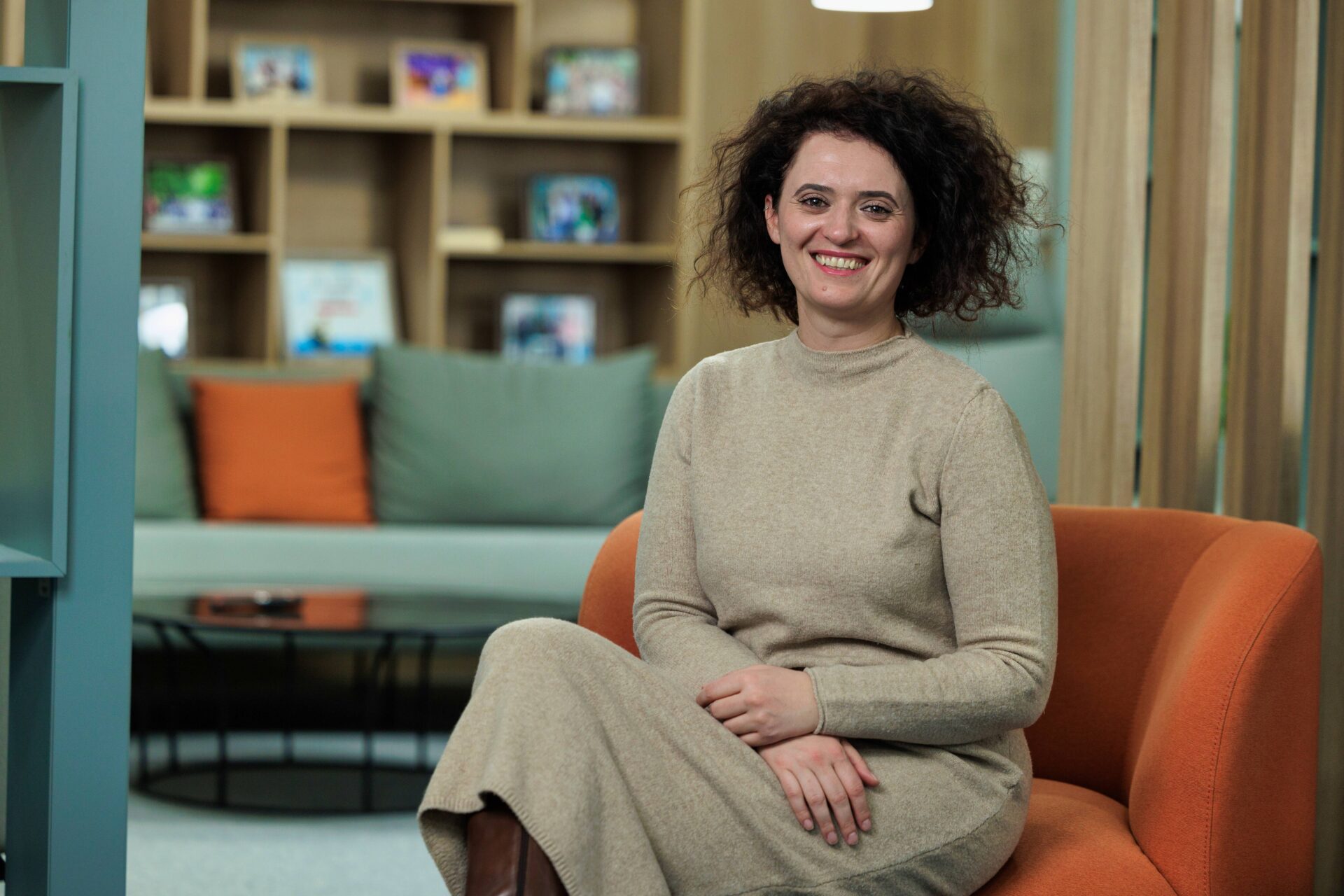
“We bring more positive emotion, and that brings more harmony,” she says. “For example, one member of my team takes care of people’s birthdays – she never forgets anyone and always ensures we buy them a gift. It may not seem a big deal, but it really helps the team to function as one.”
Fikrije Stafai, Senior Delivery Manager
Changing the stereotypes
Everyone at Damilah agrees that IT, which has traditionally been a male-dominated world, is all the better for the growing number of women who are entering the profession despite the barriers that still exist.
Galina has some advice for women considering working in this field. “Be yourself, be proud, and don’t be afraid to speak up and share your ideas,” she says.
“For a long time, tech was seen as a man’s job. We all know the stereotype of the guy in the hoodie, coding. But that’s changed and today we see amazing women in our profession. We are confident and stylish – and we also write great code, and lead teams, and build outstanding products. “We are changing what it means to be a developer.”
Galina Dushanski, Software Engineer
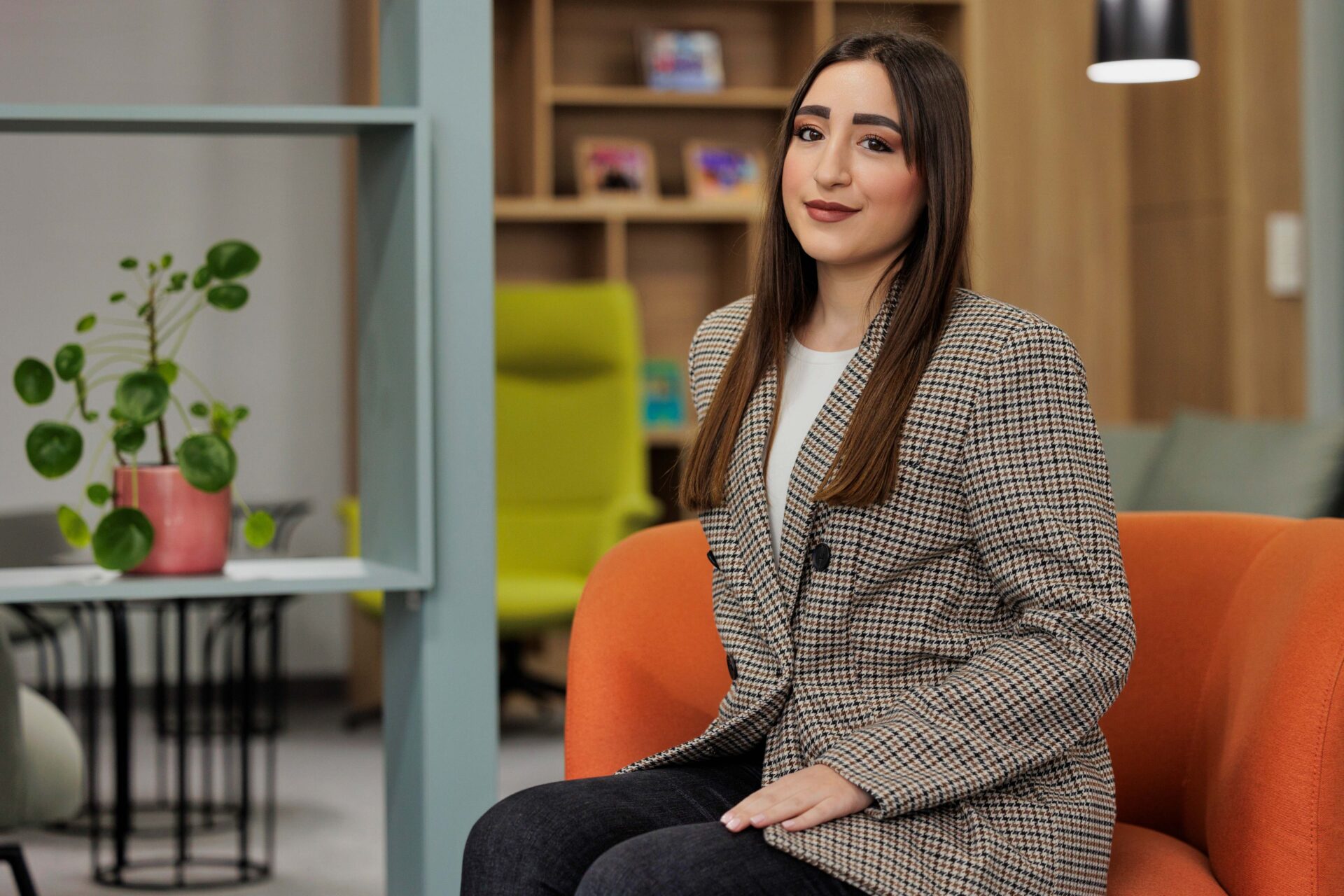
Elena concurs. “If your company is not valuing your voice, leave the company. Do not stop speaking,” she says.
And for businesses that are struggling to build and maintain a good gender balance, Sandra has some important advice. “They need to look beyond the numbers, because gender balance starts with culture,” she says.
“Businesses that find this a problem need to ask themselves: Are they creating an environment where everyone, regardless of gender, feels safe to speak, grow and lead? Because when you focus on that foundation, then gender balance becomes a natural outcome.”
Pride and positive outcomes
Unsurprisingly, the women at Damilah have a shared sense of pride about our company and how they are empowered to fulfil their potential – while also delivering great outcomes for clients.
As Galina puts it: “People here genuinely care – not just about the work, but about each other. We help one another, we share knowledge, we’re always open to new ideas. We create a space where everyone can thrive. Being part of a company where inclusion is not just a word, but a reality, makes me genuinely proud every day.”
As an ambitious business in a fast-moving market, Valve Space needed to expand engineering capacity quickly and flexibly to meet evolving product and customer demands. To support this, Valve Space opted to partner with a trusted nearshore team to accelerate delivery, complement in-house expertise and maintain momentum.
We were proud to be selected as that partner. Valve Space recognised our ability to attract and retain high-quality talent in North Macedonia, while valuing our strong cultural alignment and ability to work seamlessly as part of their team.
Our ‘partner-shoring’ approach to working with clients – a near-shoring model where the client and supplier work seamlessly and flexibly together towards common goals – aligned closely with Valve Space’s need for a scalable and collaborative delivery model and was a key factor in the company’s decision.
Delivering technical depth and collaborative support
Since January 2024, we’ve been working closely with Valve Space to provide additional engineering capacity as part of their software engineering function.
We have supplied a team of skilled professionals, including:
- Software developers
- Quality assurance (QA) testers
- Automation QA specialists
These experts supplement Valve Space’s in-house team by carrying out product development and testing, supporting on complex projects for Valve Space’s product-led growth initiatives.
This has included:
- Developing and implementing a new performance testing suite to ensure system reliability and scalability
- Enhancing customer-focused features that add value and contribute to platform revenue
Beyond pure technical expertise, we also supply additional support to enhance Valve Space’s team structure and workflow. This includes, as required:
- Fractional scrum master support on a few key projects
- Flexible team organisation, allowing Valve Space to scale capacity based on workload and project complexity
- Collaborative working environments, fostering a close partnership between Valve Space’s in-house team and our own people
One of the key highlights of the partnership so far has been a company-wide event we hosted at our headquarters in Skopje at the start of 2025. Here, the entire product and engineering teams from both companies assembled to work together and, after hours, enjoy a night of music and fun.
We are always keen proponents of this kind of gathering, to ensure distributed groups of colleagues meet face to face and can bond in person – and there is no doubt it boosted team morale, while fostering ever closer alignment and integration.
Generating added value through close collaboration
Thanks to our collaborative approach and technical expertise, the partnership between our two companies has yielded significant value for Valve Space, particularly when it comes to rapid product development, flexibility and efficiency – allowing Valve Space to sharpen its focus on delivering high-quality products to meet its customers’ needs to drive growth.
Above all, for a start-up company like Valve Space, the ability to rapidly align talent to priority initiatives is key. To date, we’ve contributed by:
- Rapidly onboarding skilled professionals to meet immediate product needs, while taking care to find individuals who align well with Valve Space’s team and culture
- Managing resources, allowing Valve Space to focus on growth rather than hiring and HR administration
- Embedding people who are able to quickly get up to speed on Valve Space’s market and customer needs through close collaboration with product managers and cross-functional teams
At the same time, Valve Space benefits from strong organisational support, such as:
- Senior leadership support that helps to ensure complex projects receive the expertise they require; whenever a significant challenge has occurred, we have been ready and willing to lean into it, with a hands-on approach from our most experienced people – including CEO Iain Bishop and CTO Aleksandar Karavasilev – as required
- Proactive problem-solving, where we always listen carefully, in order to fully understand and address challenges swiftly and effectively
- Delivery manager support to help accelerate key workstreams and keep momentum strong
Additionally, as Lucinda Faucher, Valve Space’s VP of Product Management, explains:
“A successful partnership of this kind is always built on trust, and Damilah have proven to be reliable and collaborative partners for Valve Space.”
Lucinda is pleased that the current relationship between the two companies has been highly effective so far. As Valve Space continues to grow and maximise profits, we’re proud to be seen as a long-term partner in helping them deliver on their ambitions.
A reliable and aligned partnership
The partnership between Valve Space and Damilah exemplifies the benefits of working with a skilled, flexible, and trustworthy ‘partner-shoring’ provider. Our depth of expertise, proactive approach, and commitment to building a collaborative team culture – one that feels like a seamless extension of Valve Space’s own team – has made this a highly effective and rewarding collaboration.
As Lucinda puts it:
“Damilah fosters a positive culture that really cares about its people. Most importantly, they enjoy what they do and bring great energy to the team. They’re collaborative, knowledgeable, and have taken the time to understand our vision, which helps ensure they are aligned with where we are headed and how best to support us along the way.”


Podcast powered by RingStone

John White
Partner at RingStone
Host

Hazem Abolrous
CEO at RingStone
Guest

Iain Bishop
CEO and Founder at Damilah
Guest
In this episode of the RingStone Podcast, Hazem Abolrous (CEO of Ringstone) and Iain Bishop (CEO of Damilah) discuss the realities of distributed software development—from building trust across borders to the game-changing role of AI. What emerges is a refreshingly honest conversation on what’s working, what’s not, and why a new approach to nearshoring—partner-shoring—is proving to be the way forward.
Key Insights from the Episode
1. Partner-shoring: A better way to nearshore
Partner-shoring is reshaping how companies think about nearshore development. Rather than operating as a supplier at arm’s length, the external team becomes a fully integrated extension of the client’s business—sharing the same vision, ownership, and commitment to outcomes.
“My team feels like they own the product. They’re aligned behind the vision. That’s what makes it work.” – Iain Bishop
It’s not just a resourcing solution—it’s a mindset shift, building mutual accountability and a seamless working relationship across borders.
2. Getting distributed teams right starts with people
Access to global talent and flexibility are undeniable advantages—but distributed development only works when teams are structured intentionally. Cross-functional, autonomous teams that are set up to own outcomes perform best.
Blending new distributed hires with existing team members helps transfer knowledge and build rapport. And in-person time—even casually over food or drinks—remains a powerful enabler of team cohesion.
“That’s when they stop being just colleagues and start being a team.” – Iain Bishop
3. It’s not just tools—it’s the process around them
Success in remote environments isn’t about choosing the perfect tool—it’s about creating clarity, structure, and seamless workflows across time zones. Poor processes that might be manageable onshore quickly become blockers in a distributed setup.
“You can’t just copy-paste the same setup you had onshore. You need to rethink it entirely.” – Hazem Abolrous
Rationalising tooling, aligning data flows, and automating routine steps are all part of creating a distributed model that actually works.
4. Leadership & loyalty are still human
No matter where a team sits, leadership remains the key to performance and retention. Respect, psychological safety, shared purpose, and team-based recognition go further than any perks or systems.
“Treat people like adults. Respect their input. Create a culture where people want to stay.” – Iain Bishop
Leaders who lead by example, stay close to their teams, and invest in growth and recognition help foster long-term loyalty.
5. Scaling smartly means managing risk
Scaling distributed teams isn’t just about hiring—it’s about risk management. That means starting with blended teams, understanding cultural dynamics, and ensuring proper onboarding and ownership from day one.
“Don’t make big bets blind. Blend teams. Learn the culture. Then scale.” – Iain Bishop
Scaling should be measured and deliberate, not rushed or spreadsheet-driven. When done right, it unlocks speed and resilience.
6. AI is here—and it’s changing the game
AI is already helping development teams get things done faster and better. From writing unit tests to untangling legacy code, the tools are taking care of the repetitive stuff—so engineers can focus on real problem-solving. In internal tests, developers using AI completed tasks up to five times faster, often with higher quality.
“Some people with experience of the AI tools were producing the same applications five times faster and to better quality.” – Iain Bishop
It’s not about replacing developers—it’s about accelerating them. As Hazem put it, the time saved should be reinvested in collaboration because building great software still comes down to people working well together.
7. AI + autonomy = A powerful mix
Autonomous teams supported by the right AI tools are more agile, more efficient, and better positioned to innovate. AI becomes an enabler, not a replacement, helping teams prototype, analyse, and solve problems faster—without removing the human oversight that ensures quality.
“Good teams are agile. Add AI to the mix, and you have a very powerful recipe. But it takes planning.” – Hazem Abolrous
When AI is paired with team ownership and clarity of purpose, the results compound.
Ready to Listen?
This episode is a must-hear for CTOs, product leaders, and decision-makers navigating the realities of distributed development in an AI-driven world. It’s packed with practical insight—and a refreshing focus on the human side of technology.
Check out the episode on:
Find out more, talk to us!
Are you ready to learn more about how we can deliver outstanding value for your business? Get in touch with us today to discuss your requirements and discover the difference we make.