
Blog
What will AI-enabled teams look like? The future of software delivery
We brought together CTOs, heads of engineering, architects, and product leaders from across sectors—finance, retail, government, education, and energy—to explore how technology teams will evolve over the next two years as AI becomes a core enabler of productivity and creativity.

In Damilah’s final CTO Breakfast roundtable, discussion focused on people, culture, and capability: how to steer teams through the AI transformation responsibly. AI is revolutionising the how of engineering, but not the why.
As one CTO said: “AI can write the code, but it can’t design the solution, own the outcome, or understand what the customer truly needs.”
AI will change the texture of work and accelerate delivery, but the human elements of judgement, empathy, and collaboration will only grow in importance.
Will developers disappear?
Few participants believed AI would replace engineers outright. Instead, the consensus was that roles would evolve.
“I’d be very surprised if we wipe out software developers in two years. It’s moving fast, but the tools still produce too much that’s subtly wrong in ways that’ll hurt you later.”
While AI is now taking on more junior and mid-level coding work, such as automating refactors, bug fixes, and boilerplate, participants agreed that experienced human oversight remains critical. The bigger question was how to ensure junior developers continue to learn the craft.
Several argued for creating structured apprenticeships and guided learning environments where early-career engineers can pair with AI tools while still learning principles of architecture, quality, and design.
AI is collapsing traditional boundaries. Titles like front-end, back-end, tester, and DevOps are blurring. Teams are becoming cross-functional units focused on problems, not functions.

“We’re hiring problem solvers, not just coders. AI makes it possible to wear multiple hats so they will do whatever’s required: design, infrastructure, deployment… even user research.”
The archetype of the future is the “product engineer”: someone equally comfortable exploring business context, shaping solutions, and delivering production-quality systems with AI as a partner. Architects, QA, and SRE roles will continue to grow in strategic importance, ensuring accountability and coherence as delivery accelerates.
The human element: judgement, empathy, and curiosity
Every leader emphasised that AI demands even more human creativity. The ability to ask good questions, challenge assumptions, and apply judgement has become even more valuable.
“Curiosity is the new superpower,” one CTO said. “The people who’ll thrive are those who keep testing the boundaries of what these tools can do—and when to stop trusting them.”
Curiosity, empathy, and communication are now as vital as technical skills. Engineers must understand how their work fits into business value and user experience. AI amplifies output—but only humans can decide what matters and why.
Governance and accountability
Risk, legal, and compliance teams are anxious about ownership, data exposure, and IP liability.
“Our biggest problem is fear built on lack of understanding, not lack of capability,” said one chief architect.
Several companies are creating AI governance frameworks: approved tool lists, role-based permissions, “human-in-the-loop” release gates, and model benchmarking standards. Others are reframing compliance by demonstrating that AI can mitigate existing risks, such as speeding up regulatory delivery, identifying vulnerabilities, and improving audit trails. As one participant summarised:
“Governance shouldn’t be a brake. It should be a seatbelt—something that lets you go faster safely.”
The group warned against uncontrolled “tool sprawl.” Hundreds of disconnected AI apps create fragmentation, data risk, and confusion. Many are now consolidating around agentic platforms that combine flexibility with control, enabling teams to plug in models, enforce policies, and swap components safely.
“We don’t let every team choose their own CRM; why would we let them choose their own AI stack?” one CTO asked.
These emerging AI operating environments balance innovation and governance. Over time, they’ll evolve into multi-agent systems, where AI components handle specific roles, such as code review, compliance, testing, under human orchestration and oversight.
Proximity, collaboration, and speed
AI is reshaping the pace of work. Teams can now ship prototypes and validate ideas at unprecedented speed, which also brings coordination challenges. Participants agreed that proximity is becoming even more important.
“Customers want answers now, not after someone in another time zone wakes up,” one delivery lead said.
While remote and offshore teams remain valuable, they must be self-contained and empowered, not reliant on serial handoffs.
AI makes it possible for smaller, tighter, cross-functional groups to deliver end-to-end, but success depends on communication, shared context, and immediacy of feedback. These are easier to sustain when teams are close to each other and to their users.
As one CTO put it, “AI may erase distance in code, but not in understanding. Proximity is still what creates trust, clarity, and speed.”
Legacy systems and reverse engineering
Participants shared how AI is transforming work on legacy systems, mapping ancient codebases, diagnosing defects, and even converting entire applications.
“We migrated a five-year Python system to C# in a month using AI,” one CTO recounted.
The participants all agreed that architectural judgement remains a human responsibility: deciding what’s worth rebuilding versus replacing.
We’re at the beginning of a generational shift. AI won’t replace engineering teams, but it will reshape them. The organisations that succeed will be those that invest in people, build cross-functional trust, and prepare now for the platforms, roles, and rhythms of the AI-native future.
Explore more: Find related articles on our Blog
-
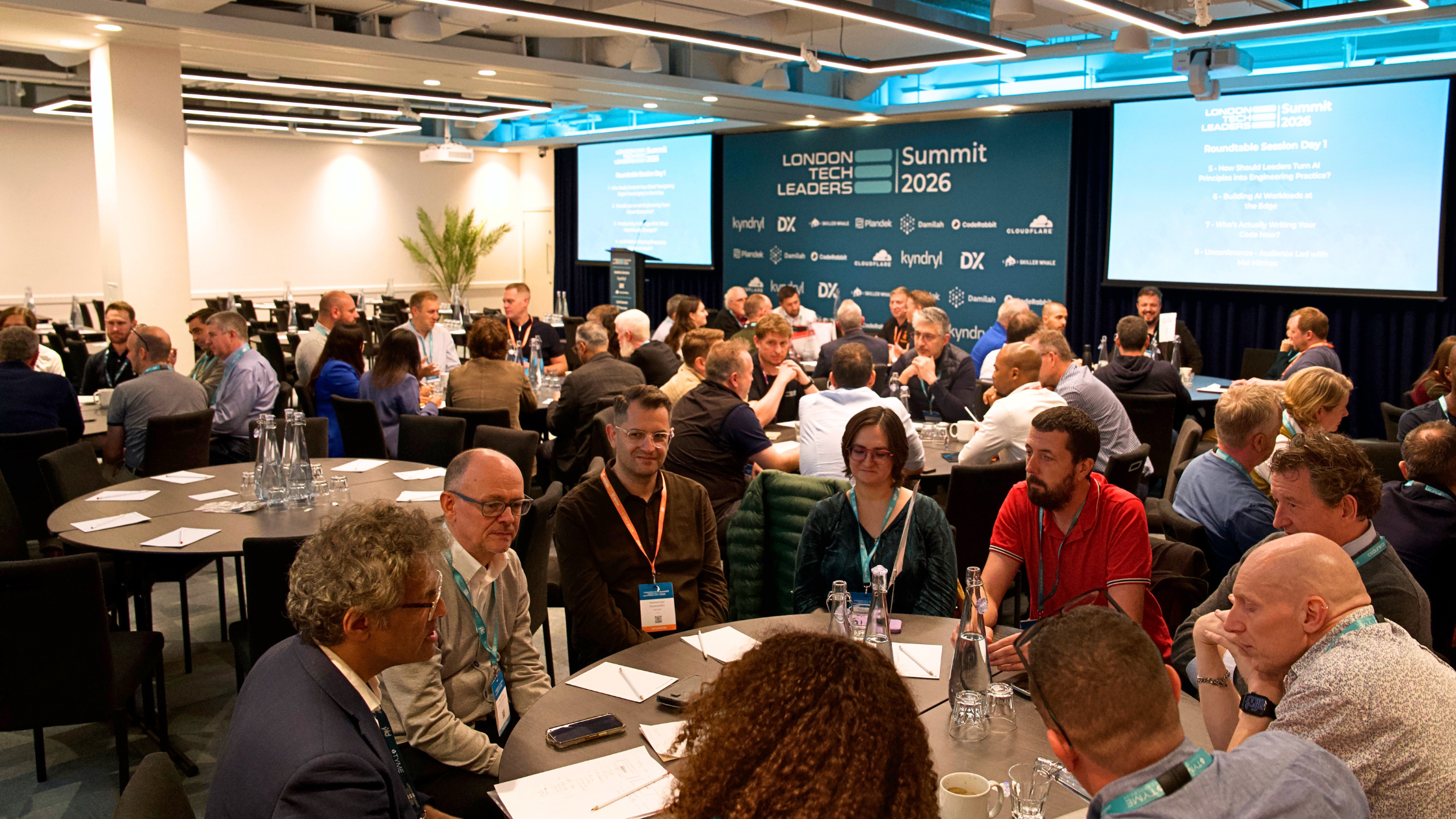
Five lessons from the London Tech Leaders Summit 2026
Is AI speeding up software delivery or just moving the bottleneck from build to governance? Are tech leaders becoming business leaders and what does that mean for the CTO role? What does “good engineering” look like now, when AI can generate code faster than teams can review it?
-

Can AI review its own code?
When your reviewer agent and your developer agent use the same model, when they are given the same context and operate with the same reasoning process, you haven’t added a second opinion. In fact, you’ve just run the first one twice.
-

One agent or many? How we think about AI orchestration for software development
When we first started building Damilah’s multi-agent platform, one of the earliest questions we had to answer was: why not just use one very good agent and give it everything?

Subscribe to our newsletter
Sign up for our newsletter to get regular updates and insights into our solutions and technologies
eBook